
Last updated September 10, 2026
Level 1 sweep and inspection to the NFPA 211 annual standard - flue, crown, cap, and flashing checked and photographed
Chimney sweep logs do not sweep chimneys. They loosen some creosote - which then falls where a brush and vacuum still have to collect it.
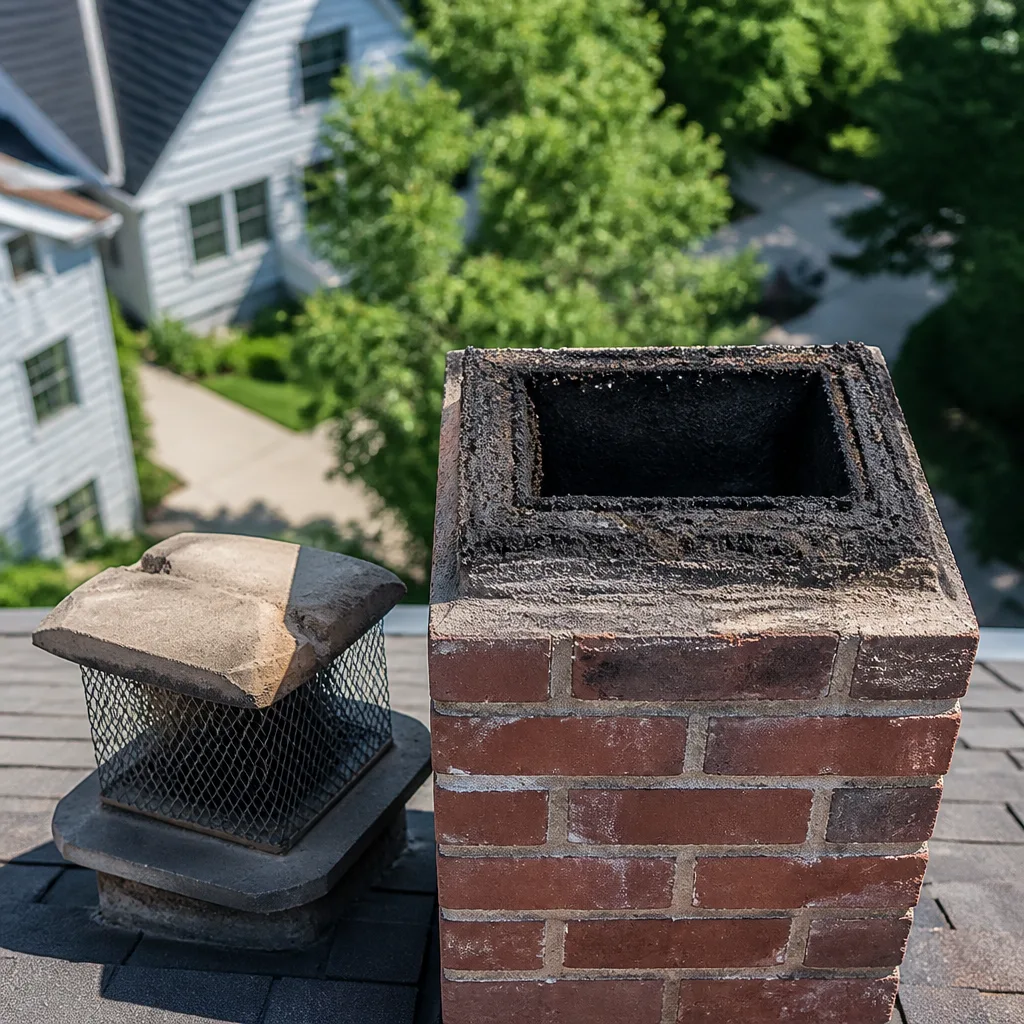
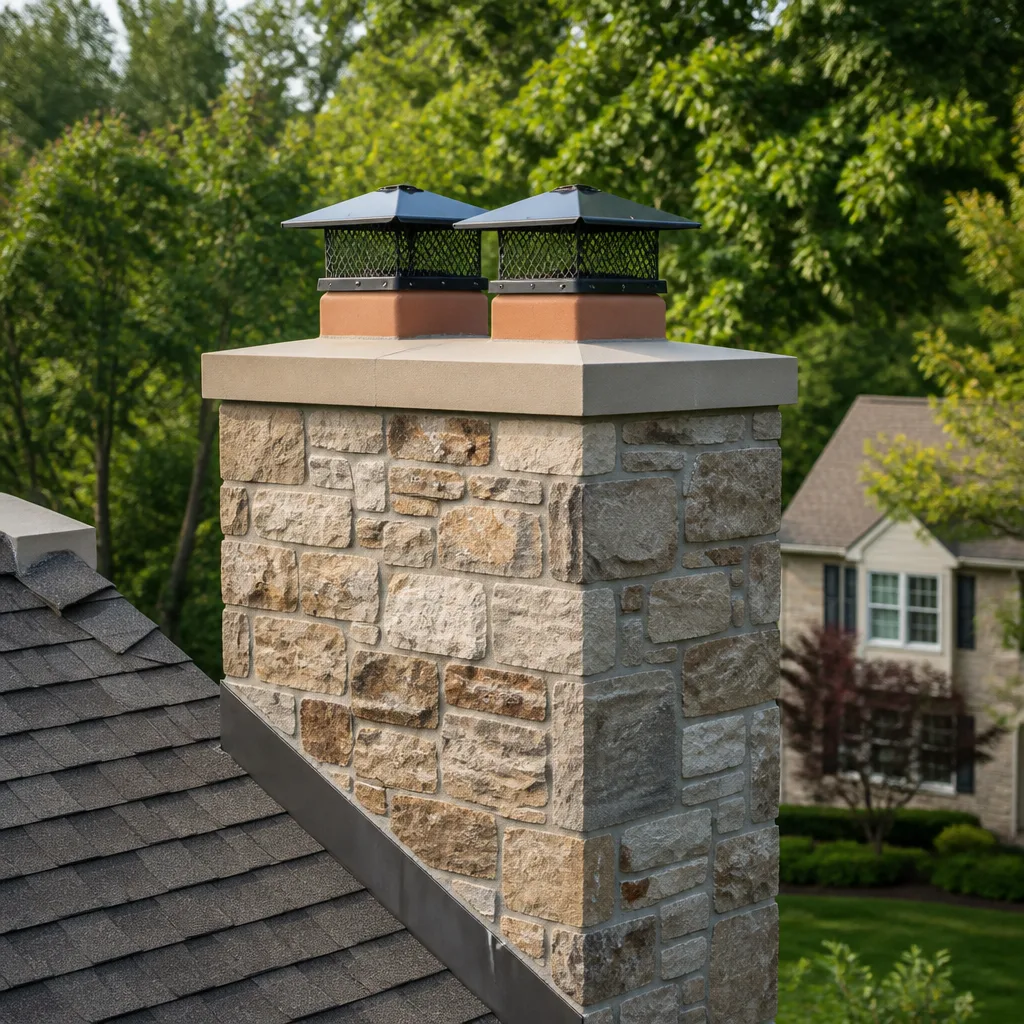
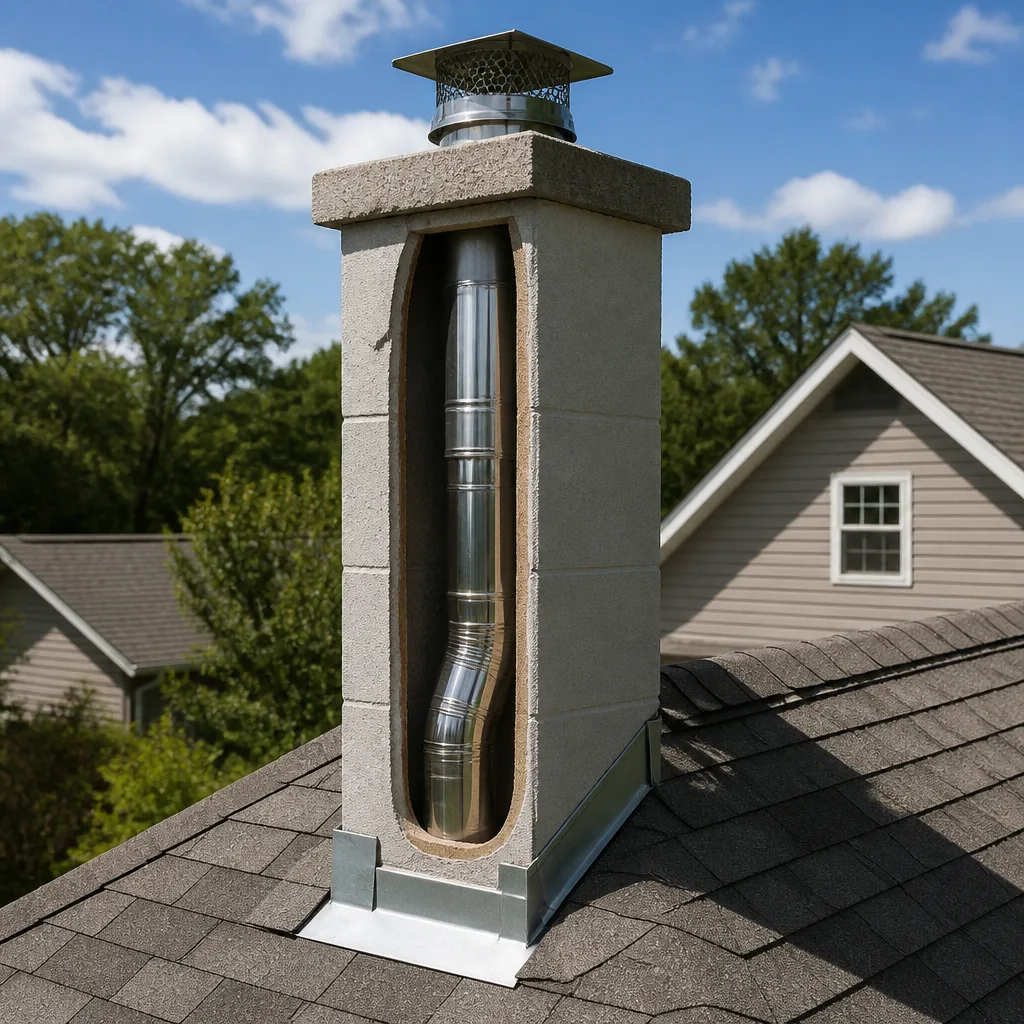
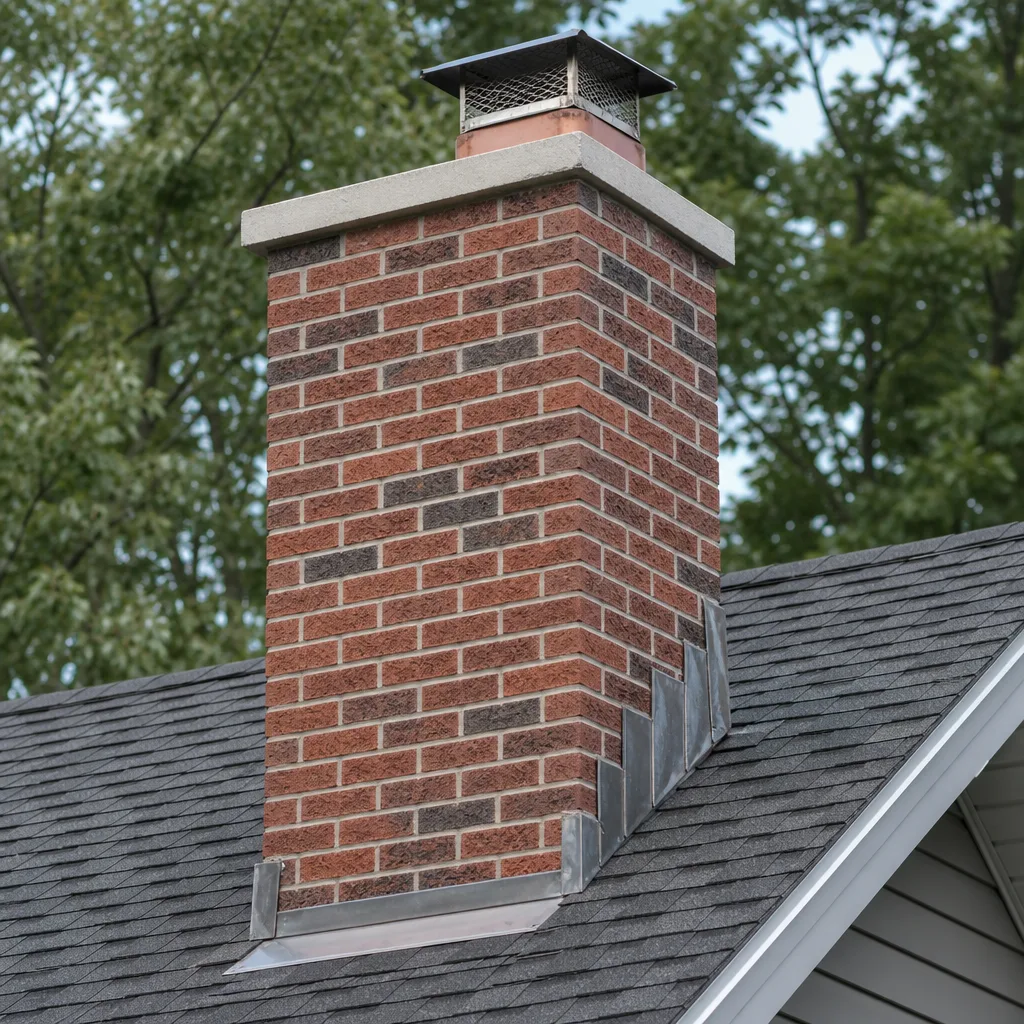
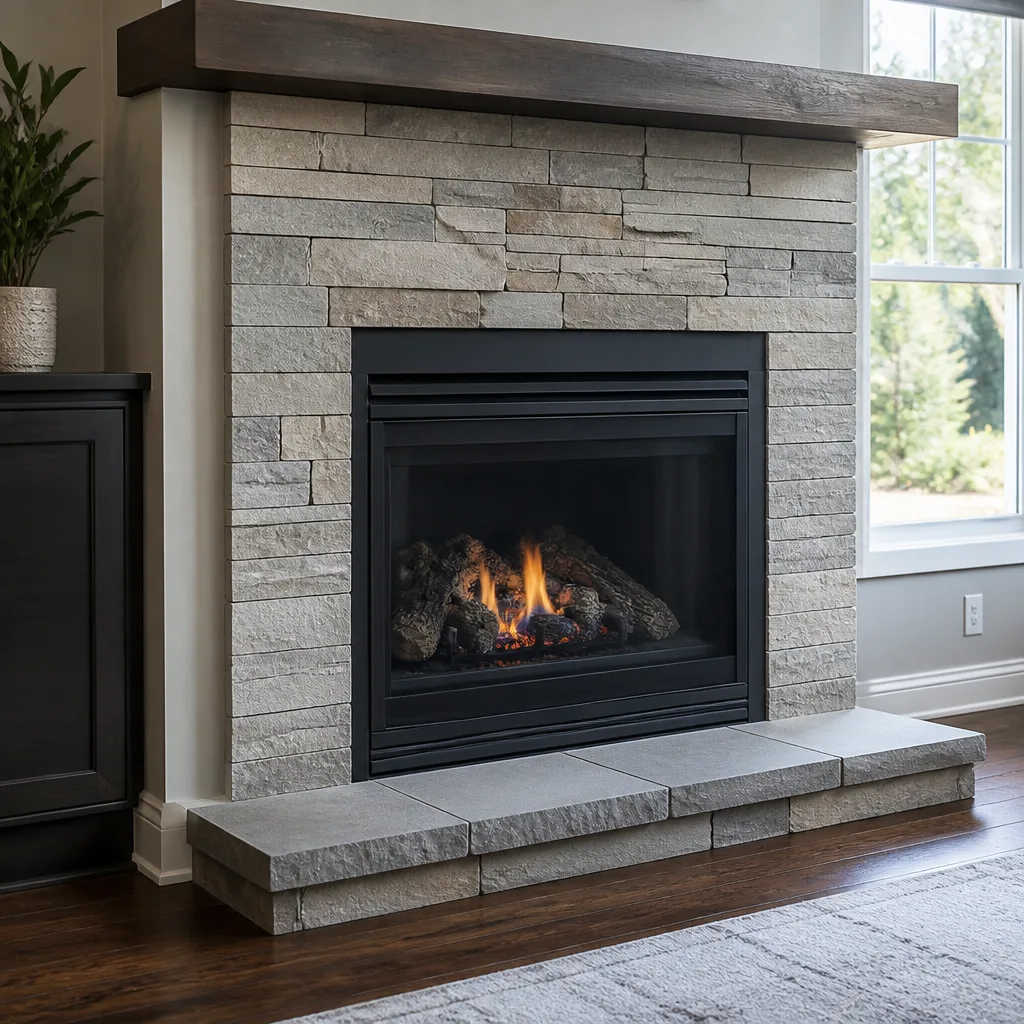
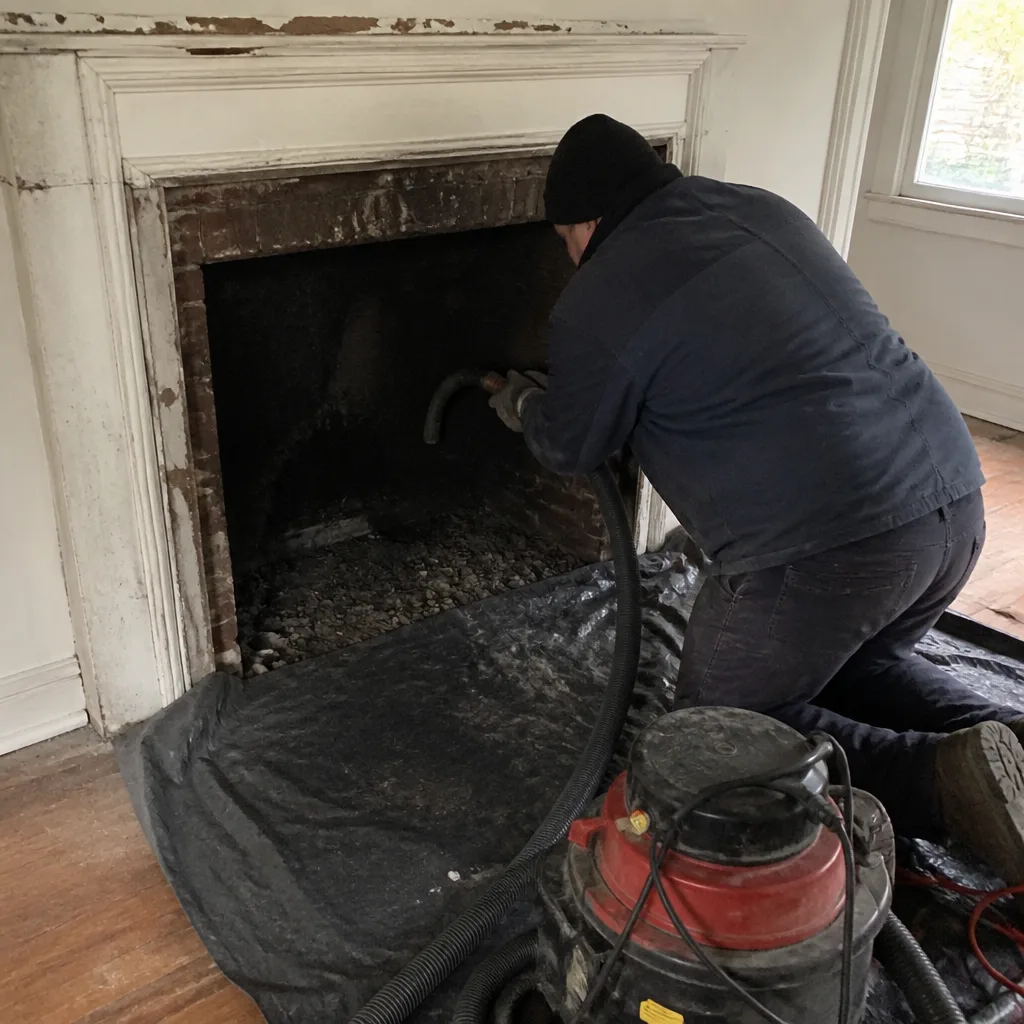 Before
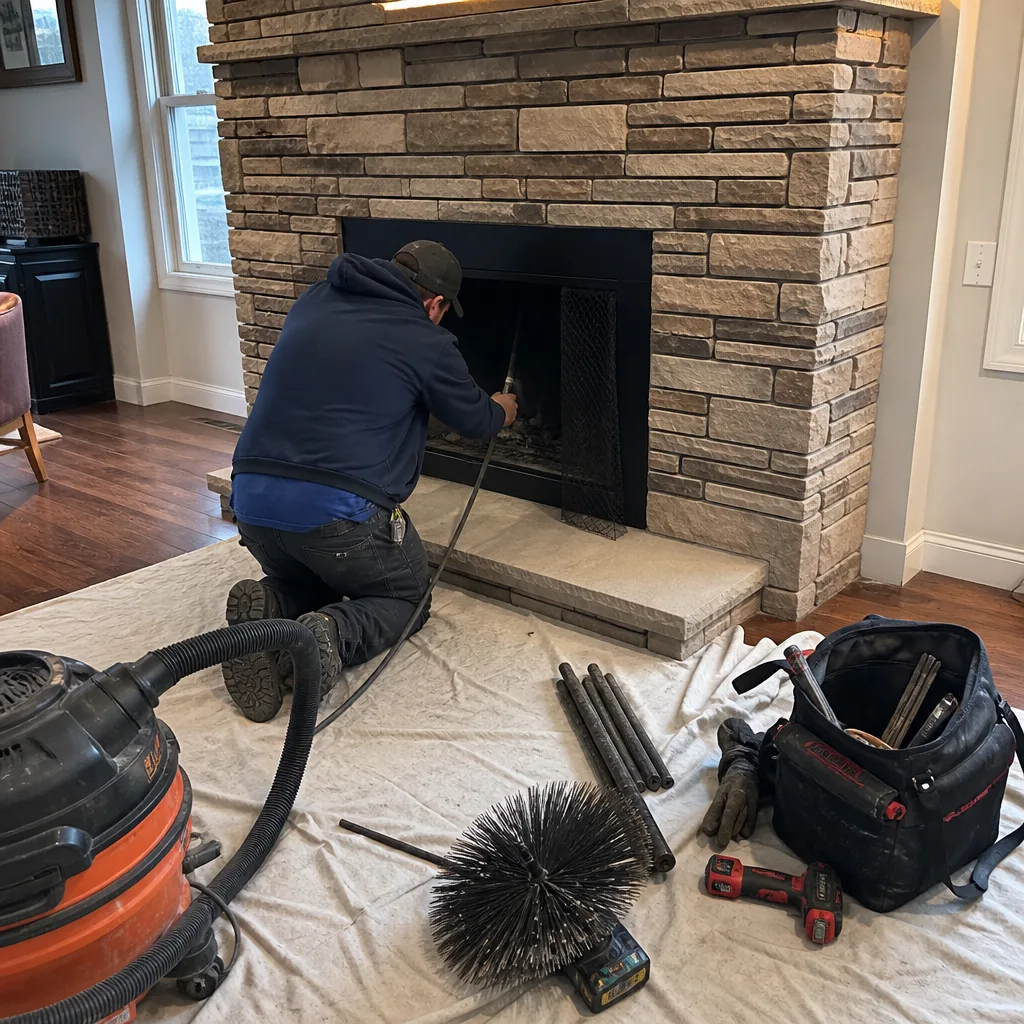 After
After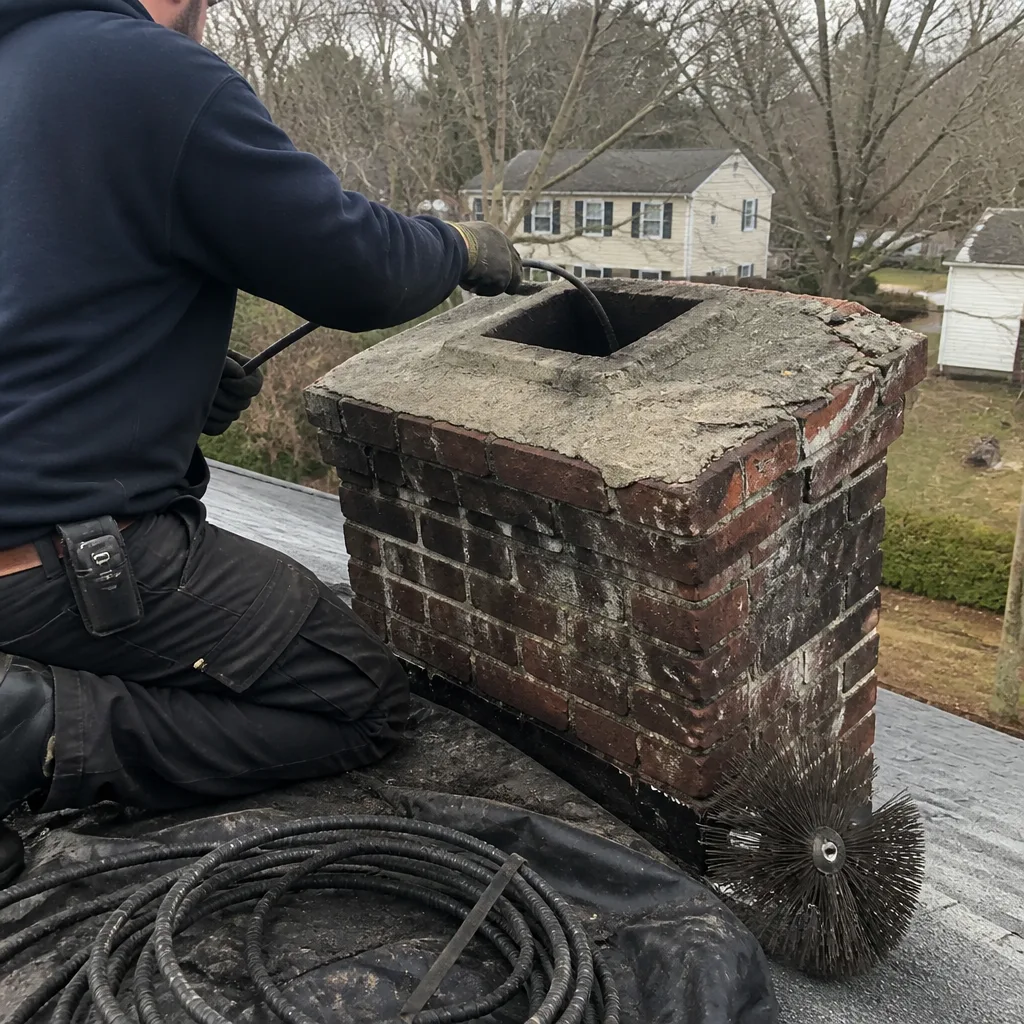 Before
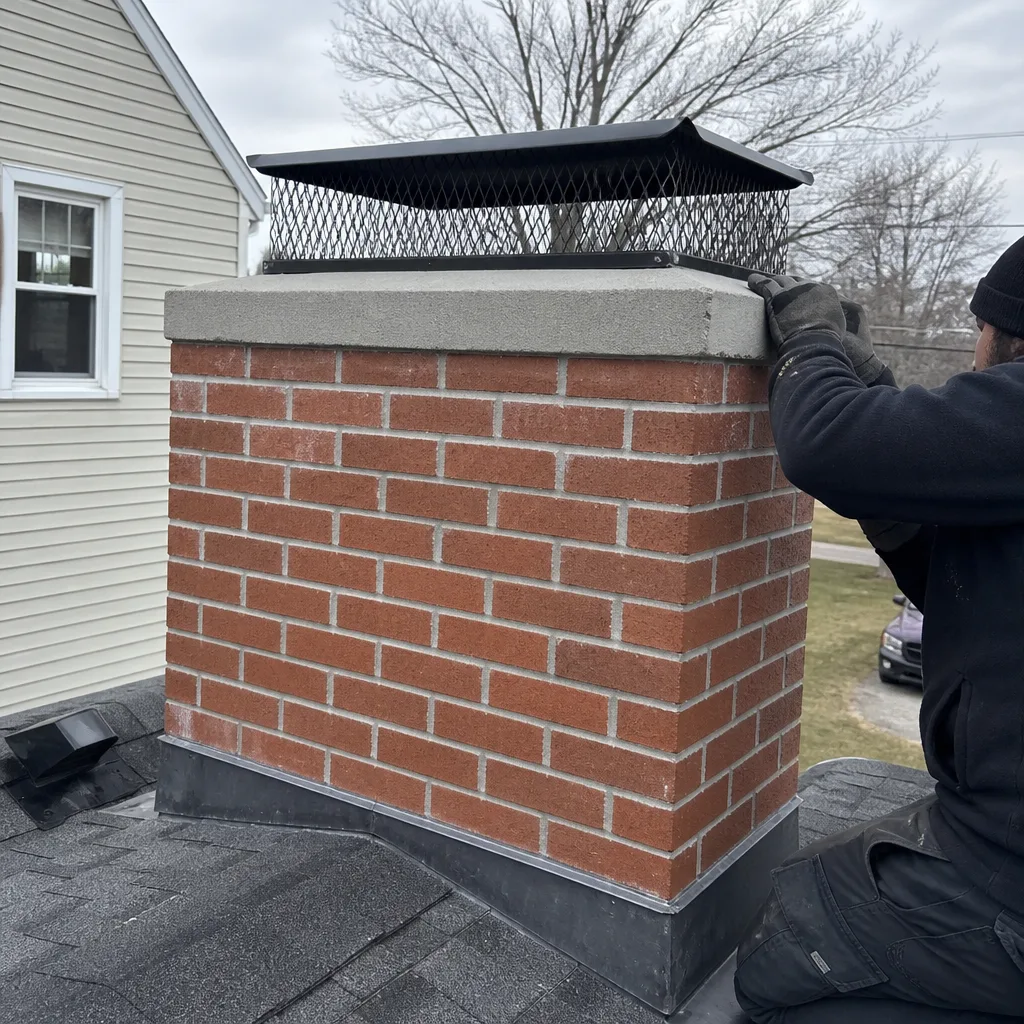 After
After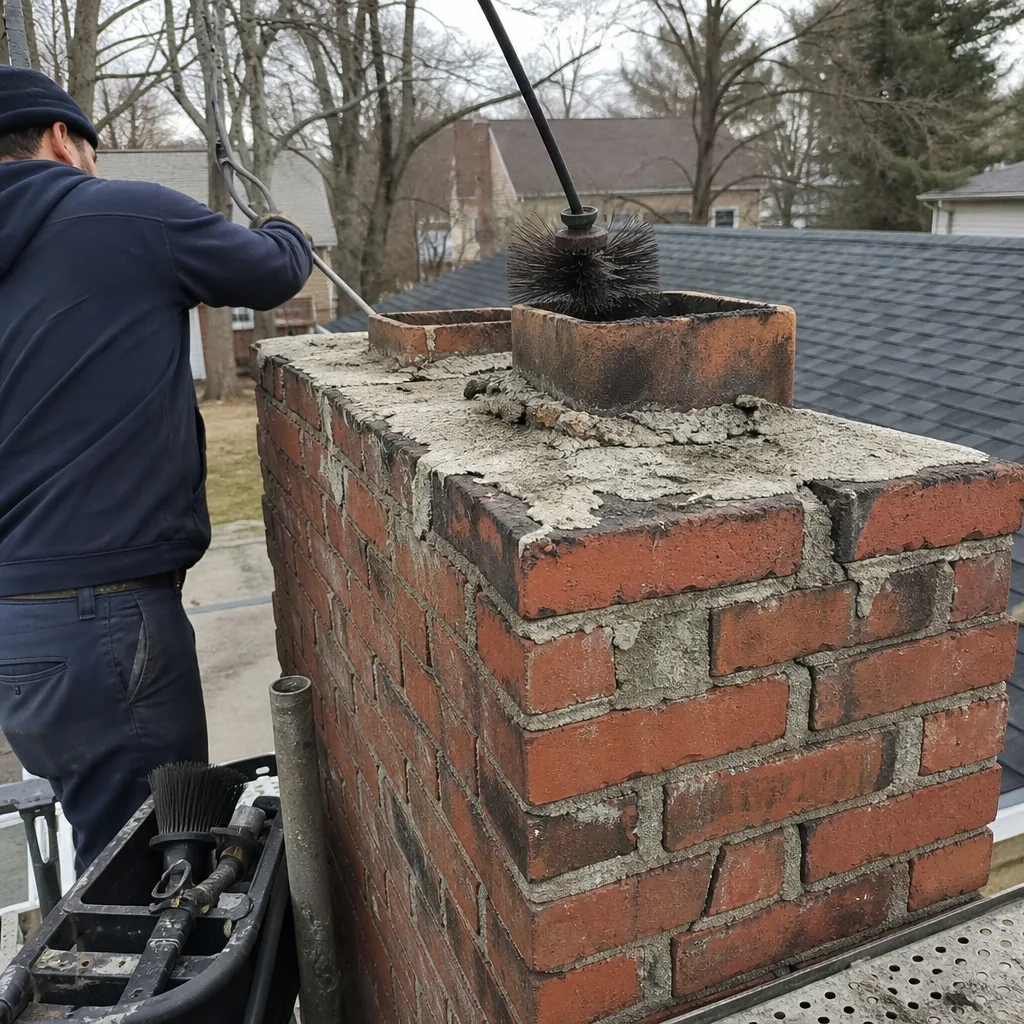 Before
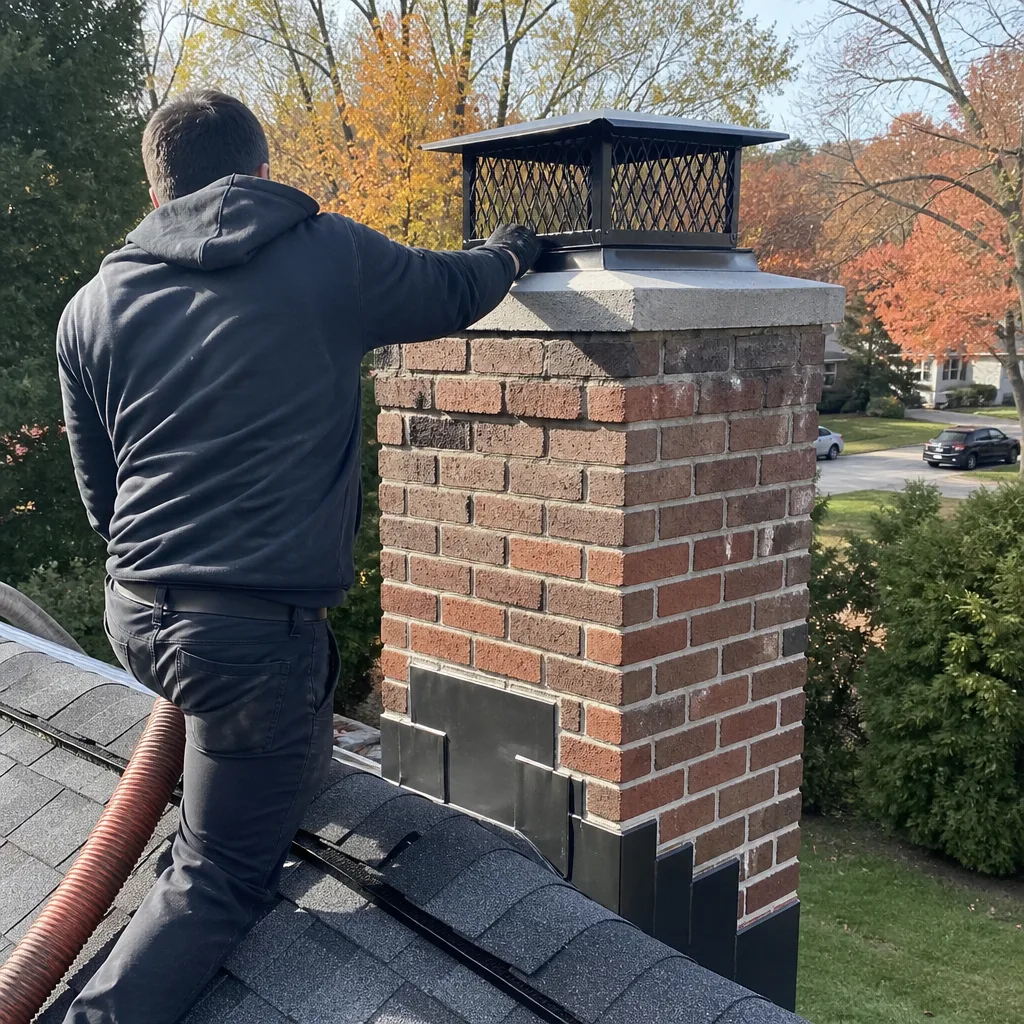 After
AfterSeasonal Chimney Cleaning Care for Waltham: Year-Round Homeowner’s Guide
The chimney fire risk in Waltham peaks in November, but the damage that causes it was done the previous March. That’s when freeze-thaw cycles opened hairline cracks in the crown, meltwater seeped in, and nobody was paying attention because the fireplace was cold. In our 42 years serving Middlesex County, we’ve learned that chimneys don’t fail in a single season - they fail in a chain of missed seasons. This guide breaks that chain with a practical calendar: what to check, when to check it, and why the timing matters more than most homeowners realize.
Quick Answer
Waltham homeowners should treat chimney care as a four-season rotation: spring inspection for freeze-thaw damage, summer for cap and crown prevention, late September for cleaning before sweep availability tightens, and winter for safe burning habits with already-verified systems. Done this way, annual maintenance costs stay predictable and emergency repairs become rare.
Table of Contents
- Winter: What Your Chimney Is Actually Accumulating
- Spring: The Season of Unpleasant Surprises
- Summer: The Hidden Damage Window
- Late September: The Only Correct Time to Schedule Cleaning in Waltham
- Off-Season Tasks That Save Thousands
- How Waltham’s Climate Creates Unique Chimney Stress
- Neighborhood-Specific Patterns We’ve Observed
- Common Mistakes to Avoid
- When to Call a Professional
- Frequently Asked Questions
- The Bottom Line
Winter: What Your Chimney Is Actually Accumulating
Every fire deposits a thin layer of creosote, a tar-like byproduct of incomplete combustion. In Waltham’s heating season, which typically runs from mid-October through April, a wood-burning fireplace used three evenings weekly can accumulate one-eighth to one-quarter inch of glazed creosote by March. That glazing is the dangerous form - hard, shiny, and fuel for chimney fires that burn above 2,000 degrees Fahrenheit.
But creosote is only the visible accumulation. Winter also drives moisture deep into masonry through a mechanism few homeowners consider: the temperature differential. A flue liner at 300 degrees on the inside and 20 degrees on the outside creates condensation. That moisture combines with acidic flue gases to form sulfuric acid, which attacks clay tile liners from the inside out. We’ve pulled liner sections in Waltham’s Prospect Hill area that looked sound from the outside and crumbled to the touch.
The other winter factor is thermal shock. A single extremely cold night - Waltham sees several below-zero events most winters - followed by a rapid warm-up can stress an already-compromised crown. The crown is the concrete slab that seals the chimney top. When it cracks, water enters the chase, freezes, and widens the crack. By February, the damage is established. By November, it’s an emergency.
Safe burning habits during active use:
- Burn only seasoned hardwood - oak, maple, or ash - with moisture content below 20 percent. Wet wood smolders, and smoldering produces far more creosote.
- Build smaller, hotter fires rather than large, banked ones. A flue temperature below 250 degrees promotes condensation and creosote buildup.
- Keep the damper fully open until the fire is established and embers are glowing. A partially closed damper restricts airflow and increases particulate deposits.
- Install and maintain working carbon monoxide detectors on every floor. A blocked or damaged flue can vent combustion gases into living spaces without visible warning.
We do not recommend DIY chimney fire attempts with chemical logs or other products. If you suspect significant creosote buildup, the safe course is professional evaluation. The Chimney Cleaning & Sweep in Waltham page details our Level-2 inspection process, which includes video documentation of flue conditions you can see for yourself.
Spring: The Season of Unpleasant Surprises
March and April in Waltham bring the most destructive weather pattern for chimneys: repeated freeze-thaw cycles with temperatures swinging between 15 and 50 degrees. Water that entered through crown cracks, deteriorated mortar joints, or failed flashing expands by about 9 percent when it freezes. That expansion forces masonry apart. One cycle does minor damage. Twenty cycles in a single month, which is common in our late winters, can destroy a crown or separate a liner from its mortar bed.
This is why we recommend spring inspection as the most important single appointment in the annual cycle. A Level-2 camera inspection in April catches:
- Liner displacement or cracking from thermal stress - visible as gaps between tile sections or fractures that daylight through to the surrounding masonry
- Crown deterioration before it becomes a full breach - hairline cracks are sealable; spalled concrete requires rebuild
- Flashing separation at the roofline - the most common leak source we find in Waltham’s older neighborhoods like the Highlands and South Side
- Water staining on smoke chamber walls that indicates prior leaks the homeowner never noticed
The economics are straightforward. A crown seal with HeatShield CrownCoat applied in April costs roughly $180-$320. A crown rebuild after water intrusion destroys the top course of brick runs $1,800-$3,400. Spring inspection is not an expense - it’s the lowest-cost insurance in home maintenance.
In our experience, Waltham homeowners who schedule spring inspections after hard winters avoid 80 percent of the emergency calls we receive in October. The pattern is consistent enough that we plan our inspection calendar around it. The photos we provide show exactly what we found and where, with a plain-English verdict on what needs attention now, what can wait, and what to monitor.
Summer: The Hidden Damage Window
Summer is when Waltham chimneys suffer the problems nobody sees until autumn. With no fire burning and windows open, homeowners simply don’t think about the stack rising above their roofline. But June through August is when three specific risks accumulate.
Animal nesting peaks in May and June. Squirrels, raccoons, and chimney swifts find uncapped flues ideal for raising young. A squirrel nest can block a flue entirely. More insidious is partial blockage - enough to restrict draft but not enough to prevent lighting a fire. The first autumn fire then smolders, producing carbon monoxide that may not trigger a detector if levels rise slowly. We remove nests from Waltham chimneys every summer, and we install Chimney Repair in Waltham caps with proper screening to prevent recurrence.
Moisture intrusion without interior symptoms is the second summer risk. A small crown crack or deteriorated mortar joint admits rain that evaporates in warm weather. The homeowner sees nothing inside. But each wet-dry cycle deposits salts within the masonry. Over several summers, this produces efflorescence - the white powdery staining on exterior brick that many homeowners mistake for cosmetic. Efflorescence is actually a leading indicator of internal masonry saturation. When we see it on a Waltham chimney, we know water is moving through the wall system. Left unaddressed, that saturation leads to spalling brick, deteriorated mortar, and eventual structural compromise.
Cap and damper deterioration accelerates in summer humidity. Metal components rust. Cast-iron dampers seize. Stainless steel caps develop pinhole corrosion at weld points. These are inexpensive to address in July when sweep schedules are open. They become expensive emergencies in October when everyone calls at once.
The off-season tasks we recommend for summer scheduling:
- Cap inspection and replacement if screening is damaged or the lid no longer sheds water properly
- Crown sealing with professional-grade elastomeric coating before autumn rains resume
- Damper lubrication and operation check - a seized damper discovered in October means no fires until repaired
- Exterior brick and mortar survey, with tuckpointing of open joints before freeze-thaw returns
Each of these tasks, done in summer, typically costs under $100-$250. Deferred to post-season emergency status, the same conditions often require $1,500-$4,000 in reconstruction.
Late September: The Only Correct Time to Schedule Cleaning in Waltham
Most Waltham homeowners think January is when chimney sweeps are busiest. They’re wrong. Our phones begin ringing heavily in the second week of October, when the first cold snap hits and someone tries to light the season’s first fire. By late October, reputable sweeps in Middlesex County are booking two to three weeks out. The homeowner with a blocked flue, a damaged liner, or a nest obstruction then faces a choice: wait in the cold, or hire whoever answers the phone.
Late September - specifically the window between September 15 and October 7 - is the correct scheduling window for Waltham. Here’s why:
- Sweep availability is at its annual maximum - we can typically schedule within 3-5 business days
- The flue contains a full season’s creosote load, ready for complete removal
- Any damage discovered during cleaning can be repaired before heating season begins
- Weather is still mild enough for exterior work like crown sealing or cap replacement
- Prices are at standard rates - October demand does not trigger surcharges from reputable companies, but it does limit your options
The cost of chimney cleaning in Waltham typically ranges from $189-$289 for a standard sweep with Level-1 inspection. For detailed pricing factors, see our Chimney Cleaning Cost Breakdown: The Waltham Homeowner’s Reference for 2026. A Level-2 camera inspection, which we recommend for any chimney over ten years old or with unknown service history, runs $289-$389. These are standard rates in September. The cost of discovering a blocked flue on the first cold night and hiring an available - not necessarily qualified - technician at premium rates is unpredictable and often substantially higher.
Our Fireplace Services in Waltham page includes our current seasonal tune-up offer, which bundles cleaning, inspection, and damper service at a single price. We publish pricing upfront because we’ve found homeowners who have been burned by contractors before - and many in our customer base have - need certainty before they’ll make the call.
Off-Season Tasks That Save Thousands
There is a class of chimney maintenance that is invisible until it fails catastrophically. These are the tasks that cost under $100 when done proactively and several thousand when deferred to emergency status. We group them as off-season essentials because they require dry weather, accessible roofs, and technician availability that only exists from April through September.
Crown sealing is the single highest-return investment in chimney longevity. A sound crown sheds water away from the flue and masonry top. A cracked crown admits water that destroys everything below it. In Waltham’s climate, with 45+ inches of annual precipitation and repeated freeze-thaw, crown maintenance is not optional. We apply HeatShield CrownCoat or similar professional-grade elastomeric sealers that remain flexible through temperature extremes. Application in dry weather costs $180-$320. Crown rebuild after water damage runs $1,800-$3,400, and that assumes the damage has not extended to the brick courses below.
Flashing inspection and repair addresses the junction where chimney meets roof. This is the most common leak source we find in Waltham, particularly in neighborhoods with older housing stock like the Lyman Estate area and near Moody Street. Step flashing corrodes, counterflashing separates, and sealants age. A simple reflash with proper integration into the roofing system costs $350-$650. Water damage to surrounding roof deck, insulation, and interior finishes runs into the thousands.
Liner condition verification through camera inspection reveals damage that summer moisture and winter thermal stress have produced. Clay tile liners in Waltham’s pre-1980 housing stock are particularly vulnerable. A cracked liner allows combustion gases to enter the chimney chase, accelerating masonry deterioration and creating carbon monoxide risk. Spot repair with HeatShield Cerfractory Foam or full liner replacement with DuraFlex stainless steel is far more cost-effective when scheduled in season rather than as an emergency that takes the fireplace offline during heating season.
Damper repair or replacement is simple when accessible and frustrating when seized. A cast-iron throat damper that has rusted in place requires either aggressive restoration or replacement with a top-sealing damper like those from Gelco or Copperfield. Top-sealing dampers seal at the chimney top rather than the throat, providing better energy efficiency and animal exclusion. Installation in summer: $450-$750. Discovery of a failed damper in October: often no heat until repaired, with premium scheduling challenges.
How Waltham’s Climate Creates Unique Chimney Stress
Waltham sits at the confluence of several climate factors that accelerate chimney deterioration relative to national averages. Understanding these factors explains why a generic maintenance schedule fails here.
Freeze-thaw frequency is the primary stressor. The National Weather Service data for Waltham shows an average of 28 days per year with temperatures crossing the freezing threshold in both directions. Each crossing is a potential freeze-thaw cycle for moisture in masonry. Only regions with more extreme continental climates - northern Minnesota, the Dakotas - experience more cycles. Coastal Massachusetts’s moderation actually increases cycle count by preventing sustained deep freeze.
Acid rain and combustion acid compound each other. Waltham’s precipitation pH averages 4.3-4.6, moderately acidic due to regional industrial and vehicle emissions. This acid interacts with the sulfur dioxide and nitrogen oxides in flue gases to produce sulfuric and nitric acids within the chimney system. The combined acid loading is higher than in regions with either cleaner air or less heating demand. We’ve observed liner deterioration rates in Waltham that exceed those in rural Vermont by 30-40 percent for chimneys of similar age and construction.
Wind exposure varies dramatically by neighborhood. Chimneys on Waltham’s hilltop exposures - near Brandeis University, along Trapelo Road elevations, and in the Highlands - experience sustained winds that drive rain horizontally into crown cracks and deteriorated mortar. The same chimney construction in a sheltered valley location might last years longer. We account for this in our inspection recommendations, suggesting more frequent exterior surveys for high-exposure properties.
Historical construction practices in Waltham’s housing stock create predictable vulnerability patterns. The mill-worker housing near the Charles River, the Victorian-era homes in the Highlands, and the mid-century construction near Route 128 each have characteristic chimney constructions with known failure modes. We’ve worked on enough of each type to recognize patterns quickly and focus inspection attention where history says problems develop.
Neighborhood-Specific Patterns We’ve Observed
In 42 years serving Waltham and surrounding communities, we’ve developed a working map of chimney conditions by area. This isn’t stereotyping - it’s pattern recognition from thousands of inspections, and it helps us focus attention where specific construction eras and exposures create predictable risks.
The Highlands and South Side (pre-1920 construction): Unlined brick chimneys or early clay tile liners, often with original mortar that has weathered to sand. Crown deterioration is nearly universal on unmodified originals. We recommend Level-2 inspection every two years and proactive crown maintenance as standard.
Near Moody Street and downtown (mixed-era, often renovated): Multiple fireplace modifications by successive owners, frequently with incompatible components. We’ve found clay tile liners connected to stainless steel inserts with improper transitions, and dampers modified by homeowners who didn’t understand draft requirements. Documentation of current configuration is essential before any service.
Trapelo Road and Brandeis area (hilltop exposure, varied construction): Wind-driven rain and thermal exposure accelerate all deterioration modes. Caps are critical here - we see more cap damage and animal intrusion in this zone than any other in Waltham. We also find more lightning damage to metal components, though this is still relatively rare.
Route 128 corridor and post-1960 construction (factory-built fireplaces, metal chimneys): Different failure modes entirely. Metal chase covers rust, factory-built firebox panels crack, and termination clearances are often compromised by later roofing modifications. These systems require manufacturer-specific knowledge that not all sweeps possess.
Near the Charles River (low-lying, higher humidity): Efflorescence and masonry saturation are more prevalent. We’ve repointed chimneys in this zone that showed no exterior symptoms but had internal moisture readings above 20 percent - enough to support mold growth in chase cavities and accelerate steel component corrosion.
Common Mistakes to Avoid
- Waiting for visible interior water damage before acting. By the time a water stain appears on a ceiling or wall near the chimney, the damage behind it is extensive. The correct indicator is exterior: efflorescence, missing mortar, or crown cracking visible from ground level with binoculars.
- Assuming a gas fireplace means no chimney maintenance needed. Gas appliances produce water vapor and corrosive condensate. Their liners deteriorate differently than wood-burning liners, but they do deteriorate. Annual inspection remains essential.
- Hiring based on lowest price without verifying credentials. Massachusetts does not license chimney sweeps specifically. A low-price operator may lack liability insurance, may not carry workers’ compensation, and may not understand Waltham’s specific building code requirements for liner installation and clearances.
- Using the chimney as a vent for a removed appliance without inspection. We find this frequently in Waltham’s older homes: a boiler was converted to direct vent, the old flue was abandoned, and nobody verified that the remaining liner is properly sized for the remaining appliance. An oversize flue for a modern appliance causes condensation and rapid deterioration.
- Ignoring the manufacturer’s service schedule for factory-built fireplaces. These systems have specific inspection and component replacement intervals. Missing them voids warranties and creates safety hazards that generic sweep knowledge won’t catch.
- Attempting DIY crown sealing with hardware-store products. Consumer-grade sealants fail within one season in Waltham’s climate. The result is false confidence: the homeowner believes the crown is protected while water continues entering through a coating that has already cracked.
- Scheduling cleaning in mid-winter after problems appear. Emergency winter service costs more, fixes less, and often cannot address underlying conditions until spring. The correct sequence is autumn cleaning and verification, then uninterrupted winter use.
When to Call a Professional
Call a sweep when you notice any of the following: visible creosote flakes in the firebox, smoke entering the room during a fire, a persistent smoky odor when the fireplace is not in use, white staining on exterior brick, pieces of tile or masonry in the firebox, or any uncertainty about when the chimney was last inspected. These are not necessarily emergencies, but they are conditions that professional evaluation should not delay.
Call promptly - the same day - if you experience a chimney fire (roaring sound, dense smoke, hot exterior masonry), if carbon monoxide detectors alarm, or if you suspect animal blockage and intend to use the fireplace. These are genuine safety situations.
Hearthstone Chimney Co. offers free estimates in Waltham. We’ll provide a camera inspection with photos you can see, a plain-English verdict on what we found, and upfront pricing before any work begins. Call (781) 905-8338. A live person answers, 24 hours a day, every day.
Frequently Asked Questions
A standard chimney cleaning with Level-1 inspection in Waltham typically costs $189-$289. A Level-2 camera inspection, which we recommend for chimneys over ten years old or with unknown service history, runs $289-$389. Our $89 Seasonal Tune-Up bundles cleaning and basic inspection for qualifying systems. Call (781) 905-8338 for an exact quote - estimates are free.
The National Fire Protection Association recommends annual inspection for all chimney systems, and cleaning as needed based on creosote accumulation. For Waltham homeowners who burn wood regularly - three or more evenings weekly during heating season - annual cleaning is typically necessary. Occasional users may extend to every two years with inspection, but we don’t recommend it given our climate’s accelerated deterioration rates. Call (781) 905-8338 to schedule.
You should not accept a liner recommendation without photographic or video evidence you can see for yourself, and a clear explanation of the specific defect. At Hearthstone, every Level-2 inspection produces dated photos of the flue interior. We show you cracks, gaps, or deterioration and explain exactly what hazard each presents. Some conditions require immediate action; others can be monitored. We also offer free second opinions on any written estimate from another company. No homeowner should spend $2,000-$5,000 on a liner replacement based on a verbal claim alone.
The most common outcome we see in Waltham is progressive water damage that starts invisibly and becomes expensive. A cracked crown admits water that destroys the top brick courses, then the flue liner, then the smoke chamber. By the time interior symptoms appear, repair costs have multiplied five to ten times. The less common but more dangerous outcome is chimney fire or carbon monoxide intrusion from a blocked or damaged flue. Both are preventable with scheduled maintenance. Call (781) 905-8338 to get back on track - we’ll assess current condition without judgment.
We don’t recommend it. Proper cleaning requires a chimney-specific brush sized to the flue, extension rods sufficient for the chimney height, and - critically - a Level-2 inspection with camera that no homeowner can perform from the firebox. More importantly, roof access for top-down cleaning is genuinely dangerous: steep pitches, ladder placement on uneven ground, and working near power lines create fall and electrocution hazards. The savings of DIY cleaning are outweighed by the risks and the inability to assess liner condition. Leave this work to insured, equipped professionals.
Summer chimney odor in Waltham is almost always creosote deposits reacting with warm, humid air. The smell intensifies when the damper is closed and the chimney is stagnant. A thorough cleaning removes the source. If odor persists after cleaning, it may indicate water intrusion carrying organic material, or animal remains. Both require professional evaluation. A top-sealing damper, installed during summer service, also reduces odor by sealing the flue at the chimney top rather than the throat.
The Bottom Line
Waltham chimney care is a year-round discipline, not a single autumn appointment. The cycle runs: spring inspection for freeze-thaw damage, summer prevention for caps and crowns, late September cleaning before demand peaks, and winter burning with verified-safe systems. Miss any season, and the next season becomes more expensive. Follow the calendar, and chimney maintenance becomes predictable - a few hundred dollars annually rather than a few thousand in emergencies. We’ve seen the difference in thousands of Waltham homes over 42 years. The homeowners who stay ahead of the cycle never become the emergency calls we answer at 10 PM on the first cold night.
Written by Russell Haines, Owner at Hearthstone Chimney Co., serving Waltham since 2014.