
Last updated September 10, 2026
Level 1 sweep and inspection to the NFPA 211 annual standard - flue, crown, cap, and flashing checked and photographed
Chimney sweep logs do not sweep chimneys. They loosen some creosote - which then falls where a brush and vacuum still have to collect it.
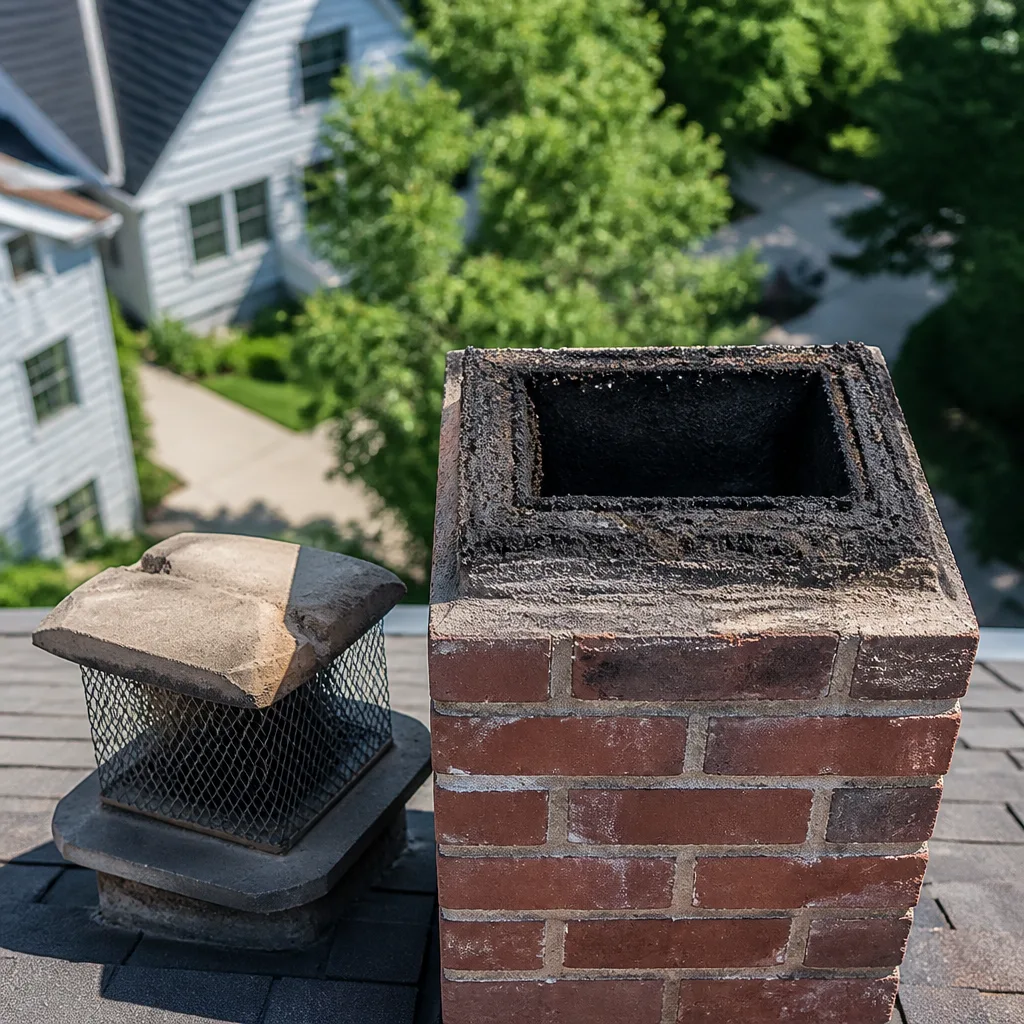
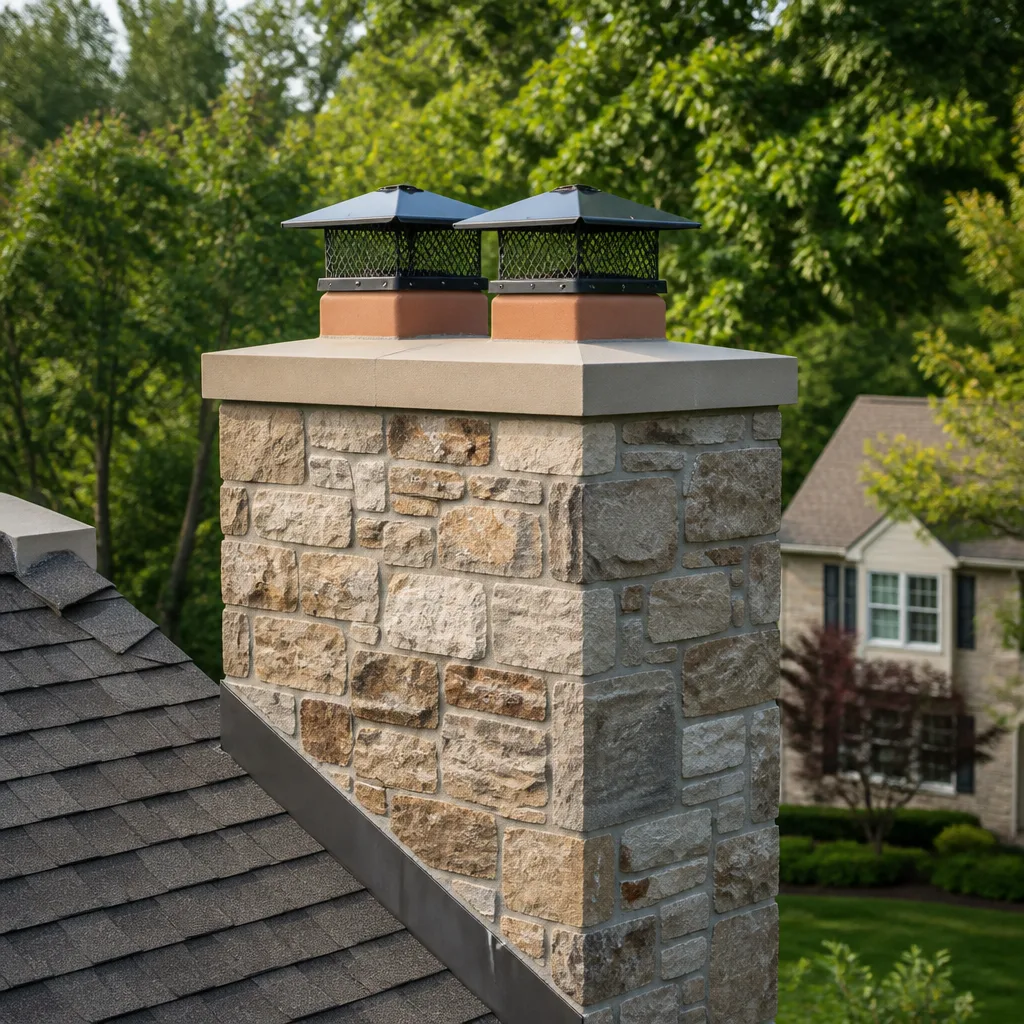
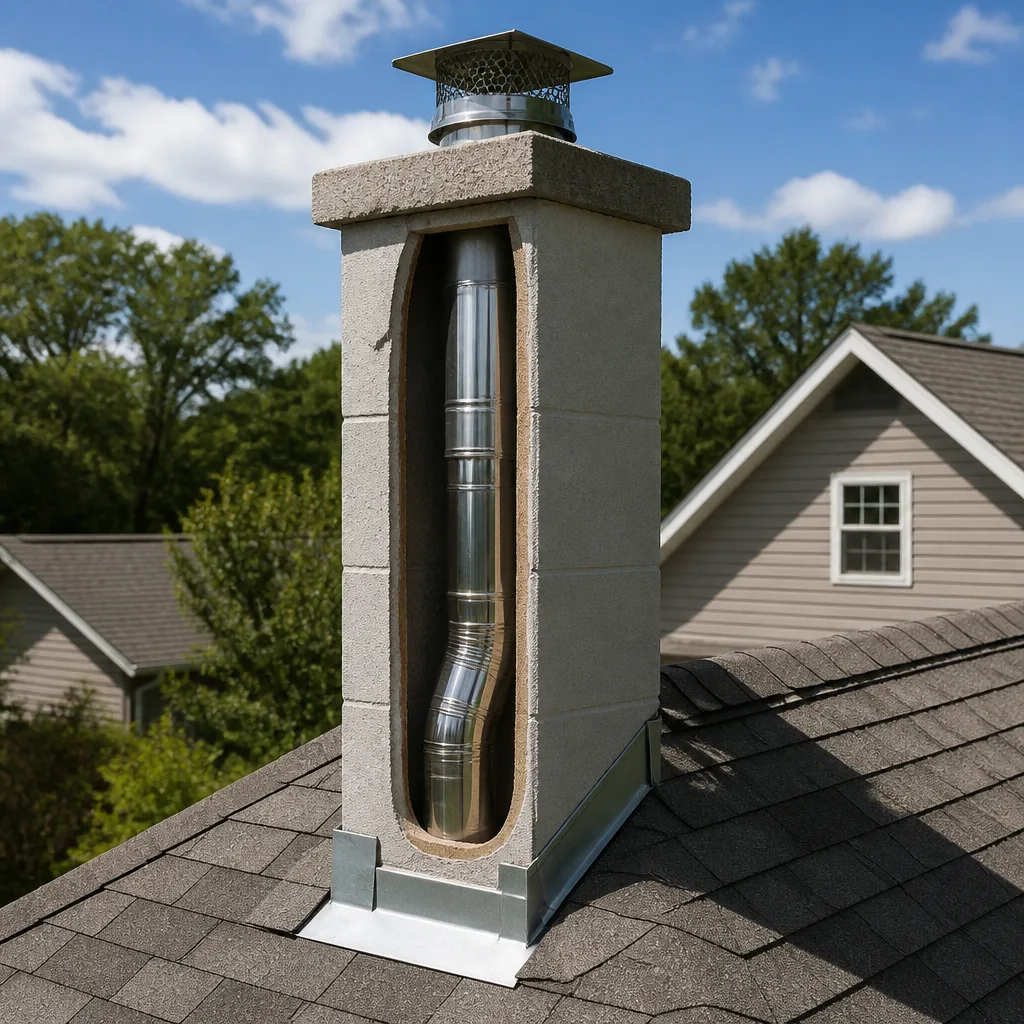
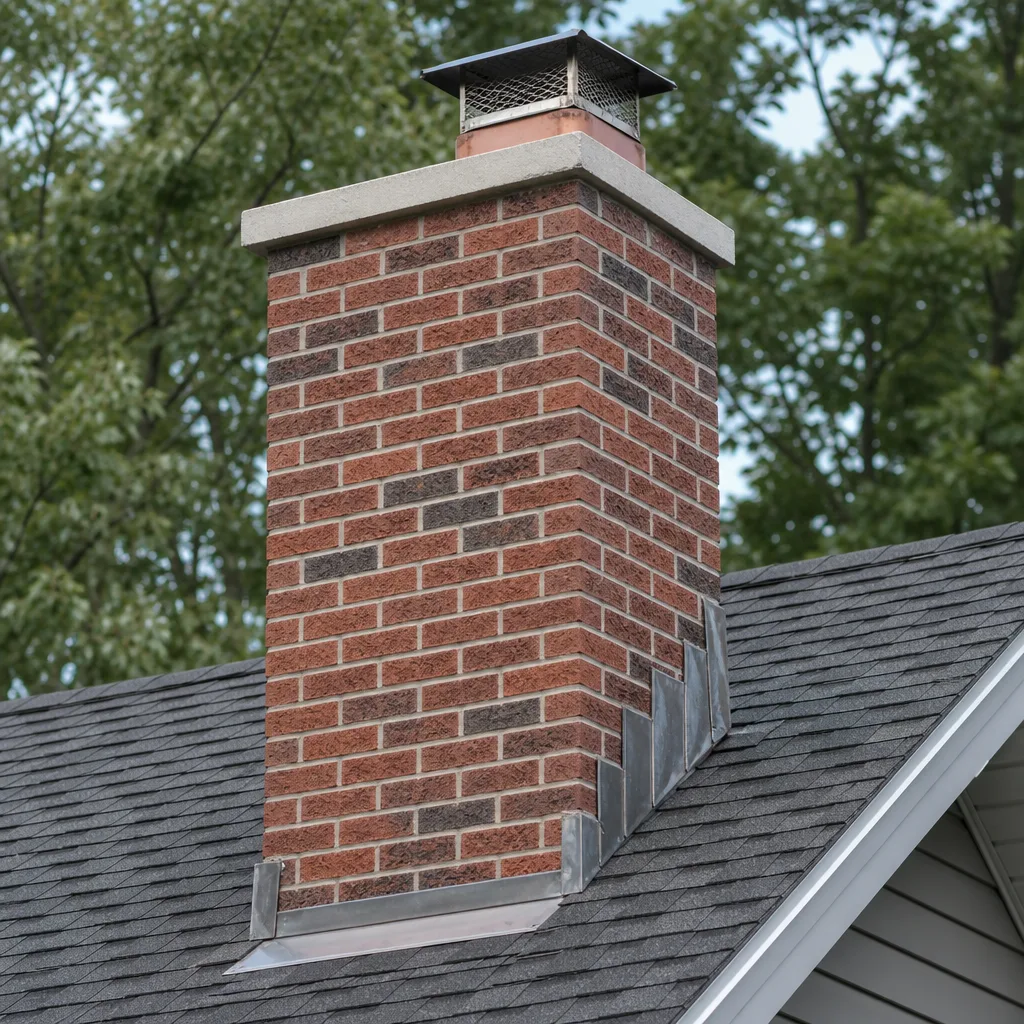
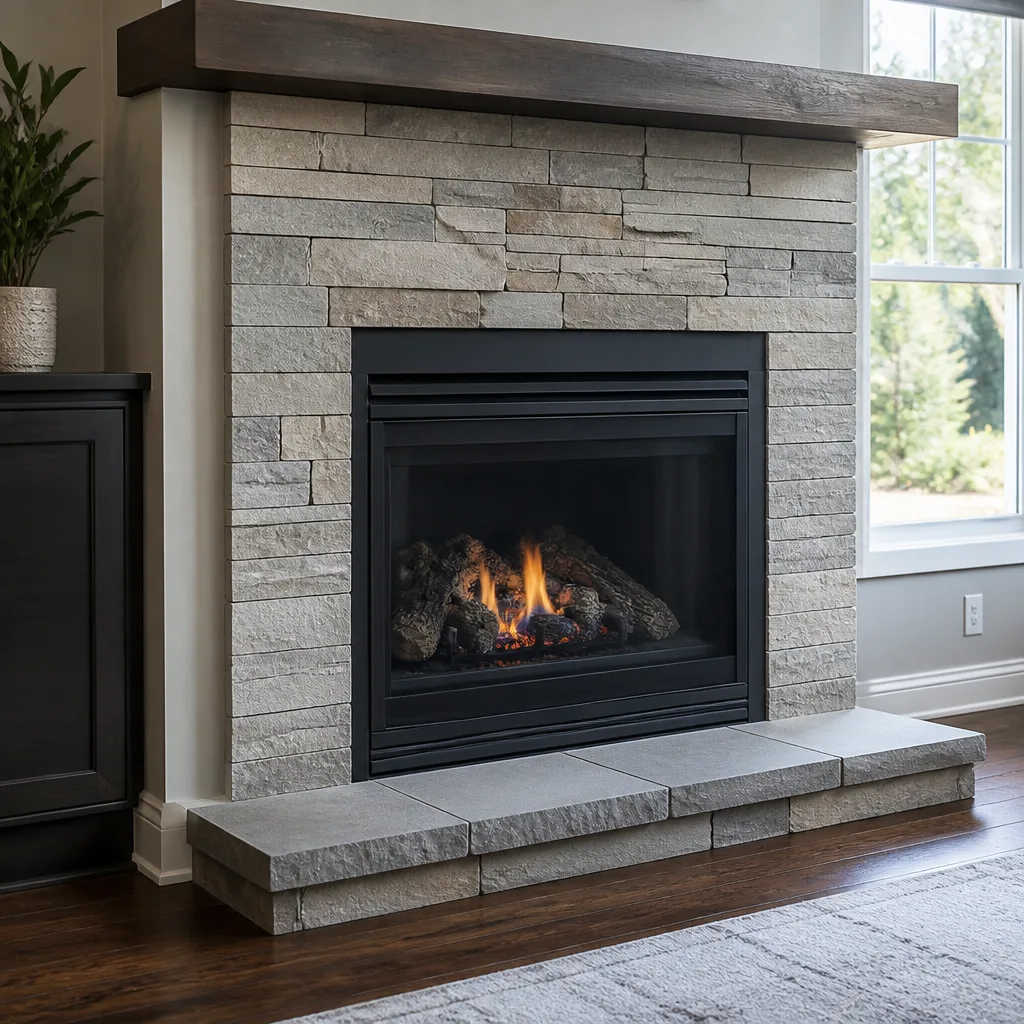
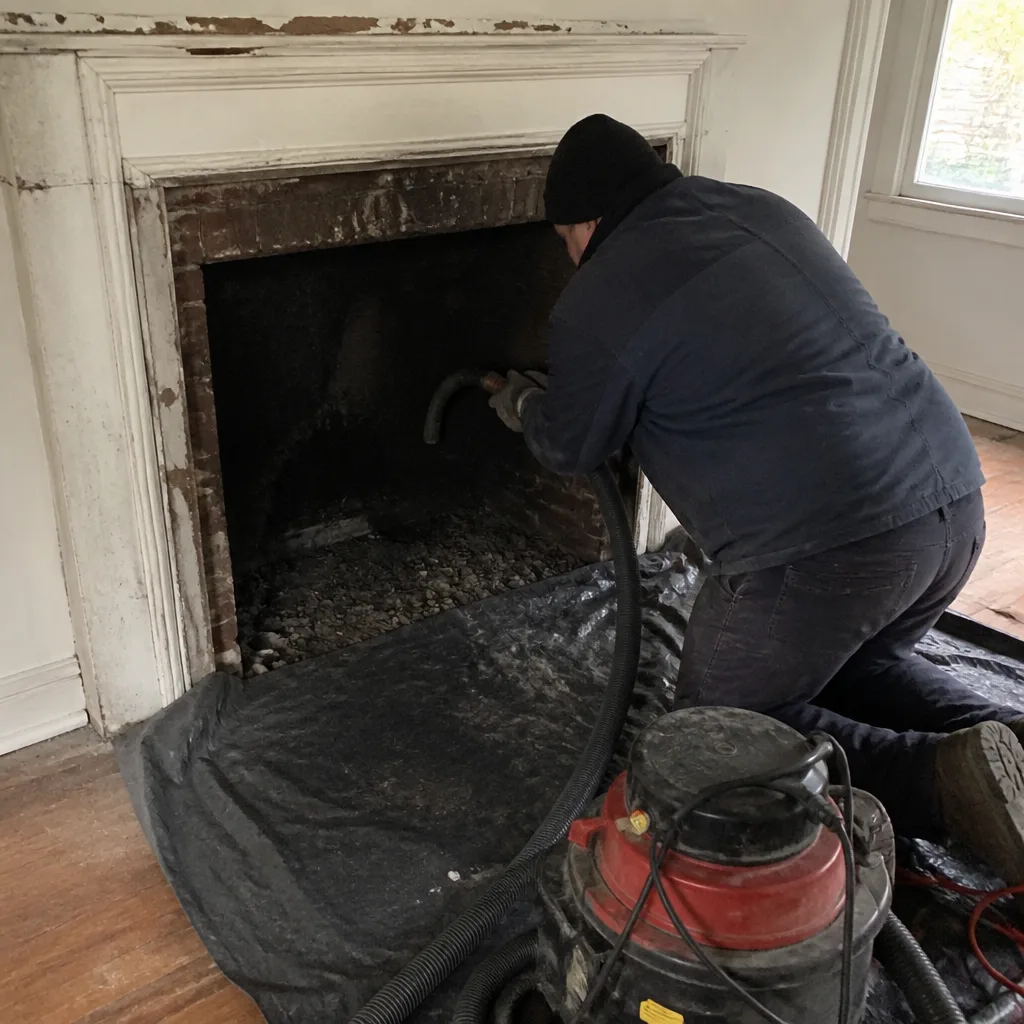 Before
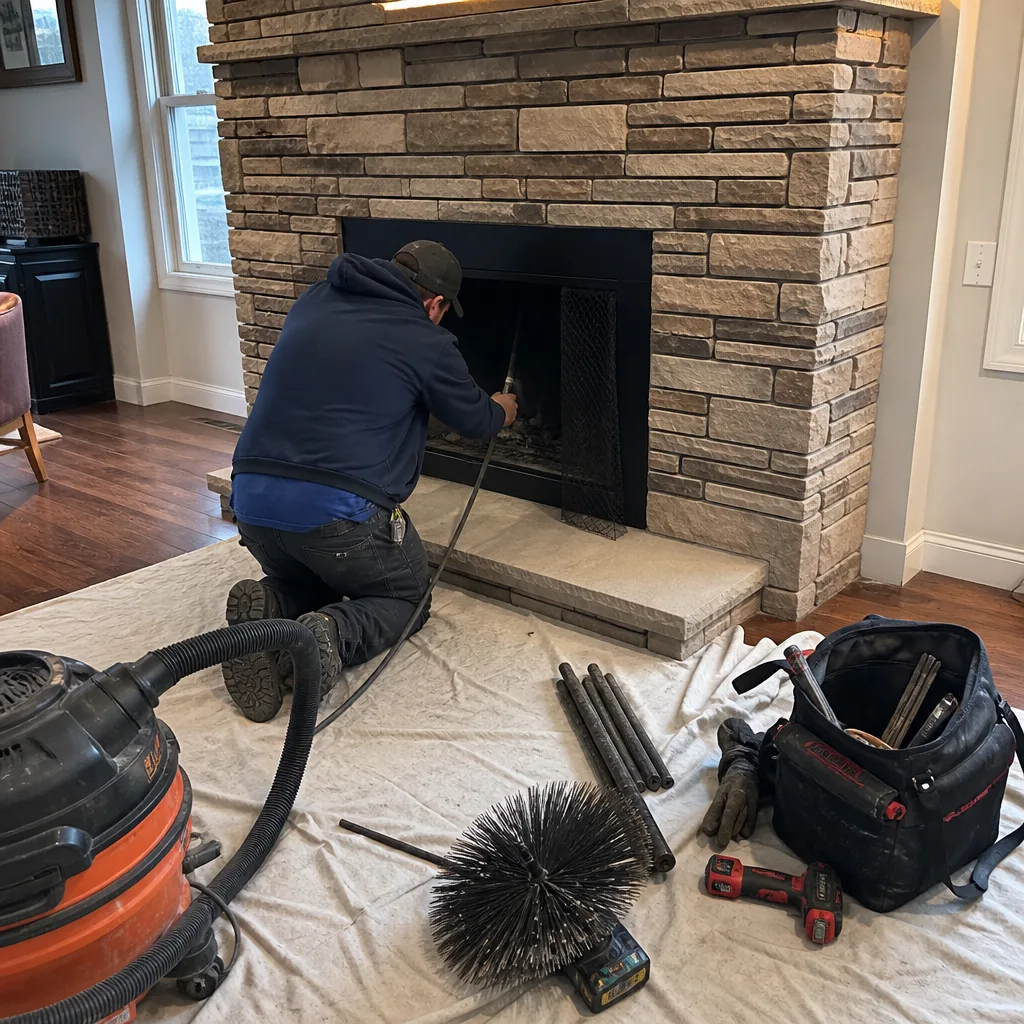 After
After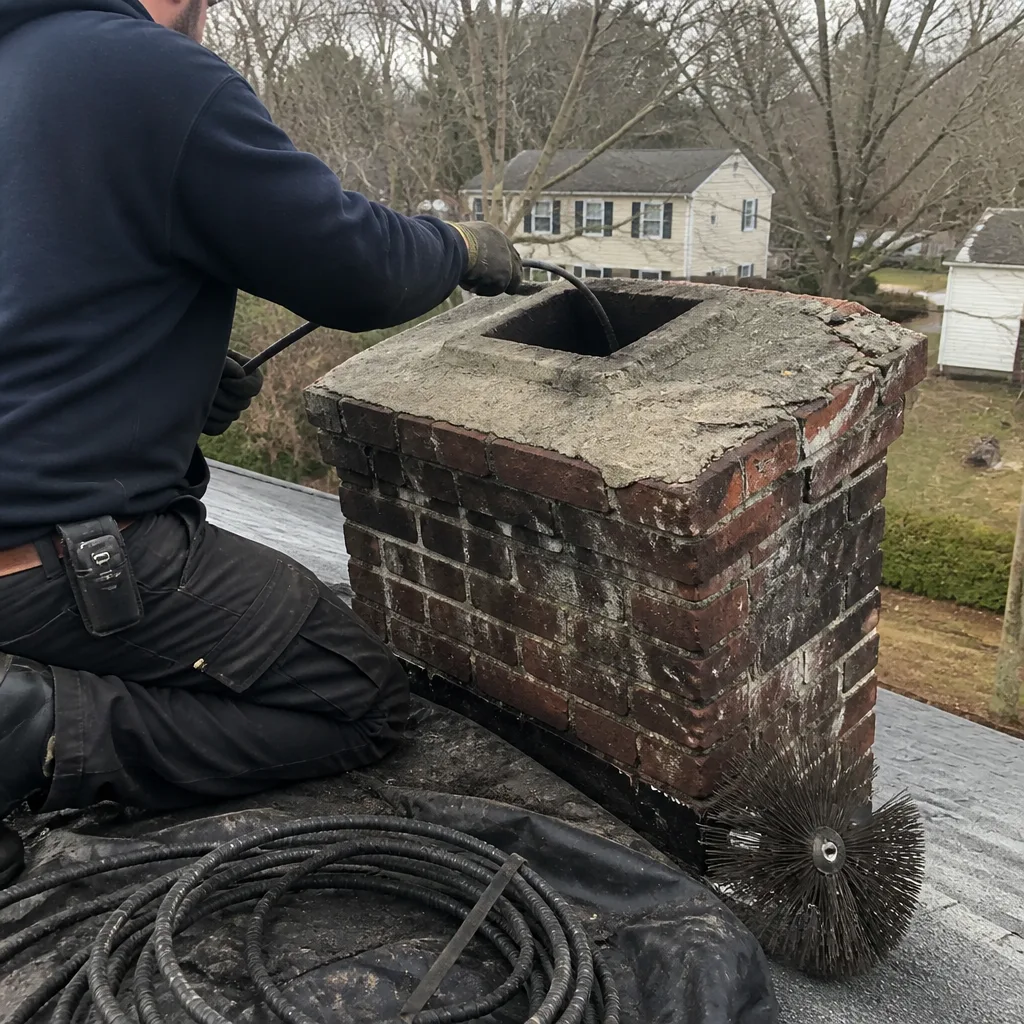 Before
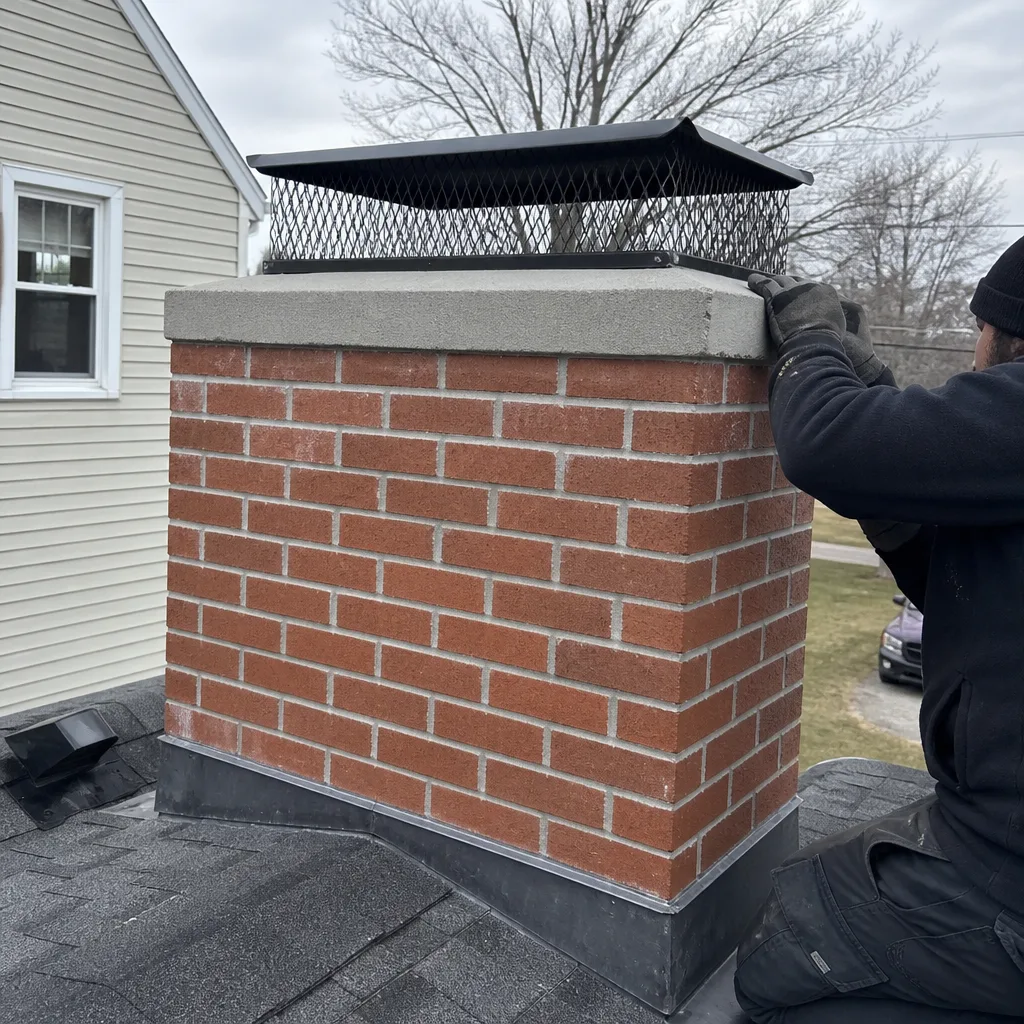 After
After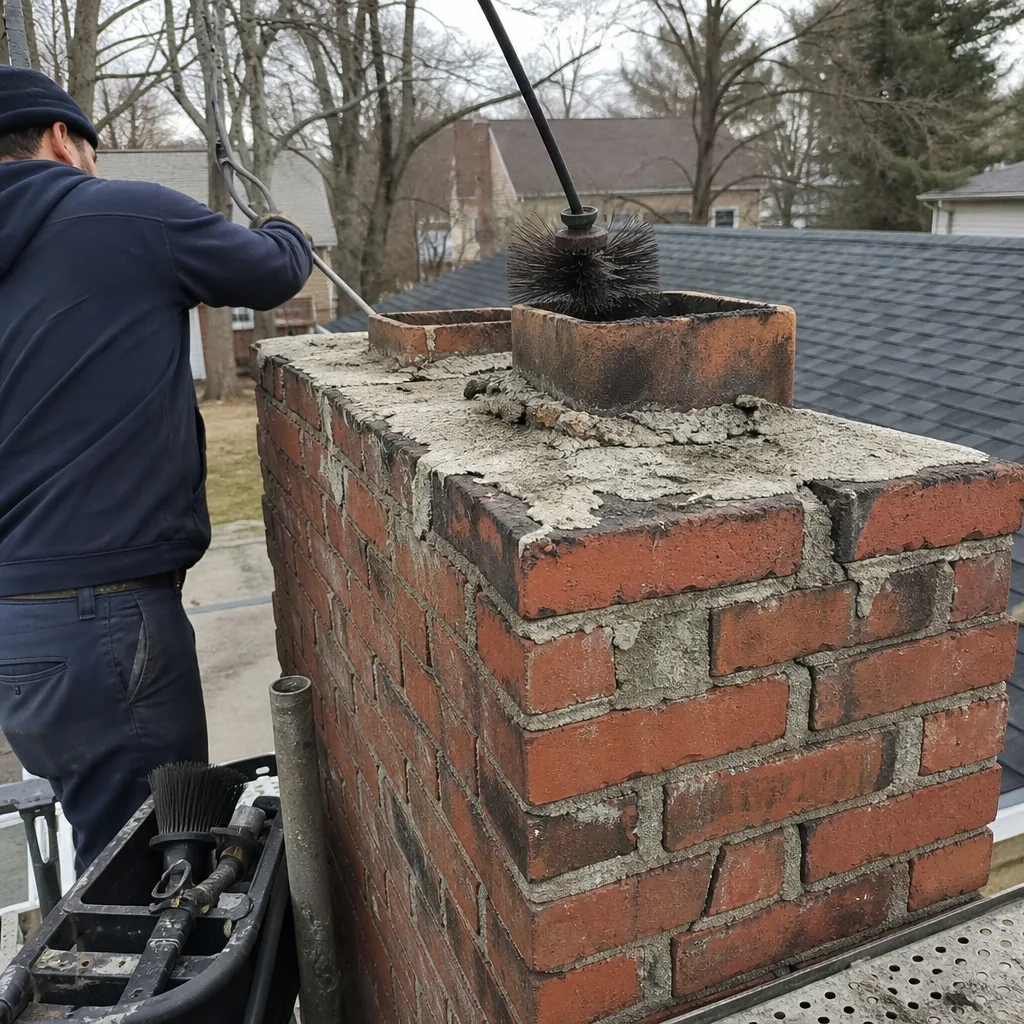 Before
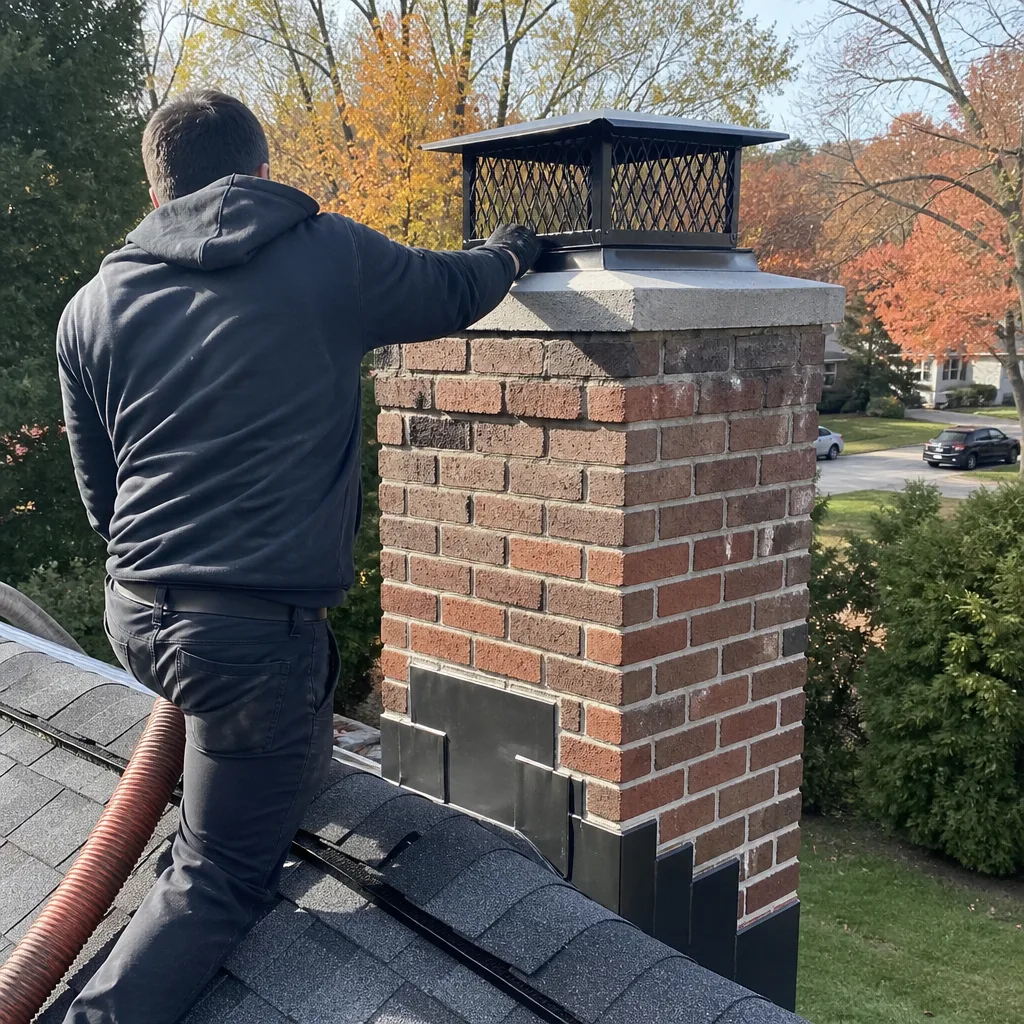 After
AfterThe Complete Guide to Chimney Cleaning in Waltham
The NFPA reports that 27% of home heating fires involve chimneys that were “recently cleaned.” That statistic stops most Waltham homeowners cold, and it should. The problem is not that cleaning fails. The problem is that cleaning the flue without inspecting the liner, firebox, damper, and crown is like washing your car and skipping the oil change. It looks right. It is not right. In this guide, you will learn what a complete chimney cleaning actually covers, why Waltham’s pre-1970 housing stock demands a different standard than newer construction, and how to read an inspection report so you know what you are paying for and what can safely wait.
Quick Answer
Complete chimney cleaning in Waltham costs between $189 and $349 for a standard Level 1 sweep with inspection, depending on appliance type, roof access, and creosote buildup severity. A thorough job addresses five distinct systems - flue, liner, firebox, damper, and crown - and includes photo documentation of every component. Most Waltham homeowners with wood-burning systems need this service annually; gas systems typically require inspection every two years with cleaning as needed. If you’re unsure whether to tackle maintenance yourself or hire a pro, read our DIY vs Professional Chimney Cleaning: The Waltham Homeowner’s Decision Guide.
Table of Contents
- The Five Systems: What “Clean” Actually Means
- Why Waltham’s Older Housing Stock Changes Everything
- Level 1, 2, and 3 Inspections: What Waltham Homeowners Need
- How Massachusetts Shoulder Seasons Destroy Waltham Chimneys
- Reading an Inspection Report: Photos vs. Verbal “Looks Fine”
- What Chimney Cleaning Costs in Waltham
- A Realistic Maintenance Schedule for Waltham Homes
- Common Mistakes to Avoid
- When to Call a Professional
- Frequently Asked Questions
- The Bottom Line
The Five Systems: What “Clean” Actually Means
Most homeowners in Waltham ask for a “chimney cleaning” and picture a brush running up the flue. That is one-fifth of the job. A complete service addresses five distinct systems, each with its own cleaning standard, failure mode, and maintenance timeline.
1. The Flue
The flue is the vertical passage that carries smoke and combustion gases out of your home. “Clean” means all measurable creosote deposits are removed down to a 1/8-inch brush finish, per NFPA 211 standards. We use professional-grade rods and brushes sized to your flue diameter, not one-size-fits-all tools. In our experience serving Waltham since 2014, flues in homes near the Charles River - particularly in the South Side and Warrendale neighborhoods - accumulate glazed creosote faster than inland properties due to persistent moisture and cooler draft temperatures.
Glazed creosote is the hardened, tar-like stage that standard brushing will not touch. It requires a chemical treatment stage before mechanical removal. If your sweep does not mention creosote stage classification, you are not getting a complete flue cleaning.
2. The Liner
The liner protects your chimney structure from heat and corrosive byproducts. “Clean” here means the liner surface is intact, properly sized, and free of cracks, gaps, or deterioration that would allow heat transfer to combustible framing. We document liner condition with a camera inspection on every job. In Waltham’s triple-decker stock, we regularly find clay tile liners with spalled faces and missing mortar joints - damage that a flue brush alone will never reveal.
Stainless steel liners from DuraFlex and Olympia Chimney are the professional standard for relining when clay tile fails. We do not install unlisted or builder-grade substitutes.
3. The Firebox
The firebox is where combustion happens. “Clean” means refractory panels or brickwork are intact, with no cracked faces, deteriorated mortar, or ash accumulation blocking air intake. Waltham’s older masonry fireplaces often have fireboxes built with common brick rather than firebrick - a cost-saving shortcut from the 1920s through 1950s that leads to accelerated deterioration. We flag this during inspection because it affects both safety and repair scope.
4. The Damper
The damper regulates airflow and seals the flue when the fireplace is not in use. “Clean” means the damper opens fully, closes completely, and operates without binding or corrosion. A damper that does not seal costs you heated air dollars every winter night. In Waltham’s humid summers, we see significant rust accumulation on throat dampers in homes without chimney caps - another reason the crown inspection matters.
5. The Crown and Cap
The crown is the concrete or mortar top that sheds water away from the flue opening. The cap is the metal cover that keeps rain, animals, and debris out. “Clean” here is the wrong word entirely. These components need to be intact, properly sloped, and correctly installed. A cracked crown in Waltham will admit freeze-thaw water all winter, spalling brick faces and destroying mortar joints from the top down. We use Copperfield and Famco caps and custom-poured crowns with proper drip edges - not the flat, cracked mortar washes we replace weekly.
Chimney Cleaning & Sweep in Waltham covers all five systems in a single visit, with photo documentation and a plain-English verdict on each.
Why Waltham’s Older Housing Stock Changes Everything
Waltham’s housing market is unusual for Middlesex County. The city has a higher percentage of pre-1970 construction than neighboring Lexington or Weston, with significant concentrations of triple-decker multifamily buildings from the 1910s through 1940s, Colonials from the 1950s and 1960s, and scattered Victorian-era single-family homes. This matters for chimney maintenance in four specific ways.
Unlined or partially lined chimneys. Many triple-decker chimneys were built without clay tile liners, or with liners that have deteriorated past functional service. A sweep that only brushes the flue in these chimneys is polishing a condemned pipe. We camera-inspect every Waltham chimney before recommending cleaning scope because we have found too many “clean” flues with exposed brick and eroded mortar that would fail a Level 2 inspection.
Oversized flues for modern appliances. A 1950s Colonial fireplace with an 8×12 inch flue was designed for an open hearth burning cordwood. Connect a modern insert or gas appliance, and the flue is too large for proper draft. The result is creosote condensation in the upper flue and chronic cold-start smoking. We measure flue area against appliance output on every inspection and recommend relining when the ratio is wrong.
Multiple appliances, single flue. Triple-decker buildings often have one chimney serving three floors of heating equipment, sometimes mixed fuel types. This is legal only under specific code conditions that most Waltham properties do not meet. We document shared flue configurations and flag code violations that affect insurance coverage and occupant safety.
Embedded in exterior walls. Waltham’s older chimneys are often built on exterior walls with three sides exposed to weather. This accelerates freeze-thaw damage compared to center-chimney designs. In the Piety Corner and Bleachery neighborhoods, we see exterior spalling and mortar joint erosion that interior chimneys in newer construction simply do not experience.
Russell Haines has inspected chimneys in every Waltham neighborhood from the North Side to the South Side, from Main Street triple-deckers to the ranch homes near Brandeis. The patterns are consistent: age and construction type predict failure mode more accurately than usage hours.
Level 1, 2, and 3 Inspections: What Waltham Homeowners Need
NFPA 211 defines three inspection levels, and Massachusetts building code references these standards. Most Waltham homeowners do not know which level they are paying for, which means most do not know what they are actually getting. Our How to Hire a Chimney Cleaning Contractor in Waltham: A Step-by-Step Guide explains exactly what to ask before you book.
Level 1 Inspection
This is a visual examination of readily accessible portions of the chimney exterior, interior, and connecting appliances. No tools are used to open or remove components. A Level 1 is appropriate when:
- The appliance or venting system is not changing
- You are continuing with the same fuel type
- No malfunction, fire, or external event has occurred
- You had a Level 2 inspection within the previous 12 months with no recommended follow-up
For routine annual cleaning in Waltham, a Level 1 with camera verification of flue and liner condition is our standard minimum. We do not perform “blind” sweeps without visual confirmation.
Level 2 Inspection
A Level 2 includes everything in Level 1 plus examination of accessible attics, crawl spaces, and basements, and a video scan of the flue interior. This level is required when:
- You are selling or transferring the property - Massachusetts home inspectors are not chimney specialists, and their visual check does not satisfy this standard
- You are changing appliance type, fuel type, or chimney connection
- A building permit was issued for work affecting the chimney
- A chimney fire, lightning strike, or seismic event has occurred
- You have not had inspection documentation in the past 12 months
Our Chimney Repair in Waltham page details the repair protocols that follow Level 2 findings.
Level 3 Inspection
A Level 3 is invasive. It requires removal of building materials - wall coverings, chimney surrounds, possibly structural elements - to access concealed portions of the chimney. This level is ordered when a Level 2 indicates a hazard that cannot be evaluated without demolition. We have performed Level 3 inspections in Waltham after chimney fires where the homeowner smelled smoke but saw no flame, and where hidden pyrolysis of nearby framing was the real risk.
Most Waltham homeowners never need a Level 3. The critical point is this: if your sweep offers only Level 1 and never recommends Level 2, you are not getting complete information. And if your sweep cannot explain when each level applies, they may not understand the standard they claim to follow.
How Massachusetts Shoulder Seasons Destroy Waltham Chimneys
Waltham’s climate is harder on chimneys than the raw temperature numbers suggest. The problem is the shoulder seasons - October through November and March through April - when daily temperature swings reach 30 degrees and relative humidity stays above 60%.
Here is the mechanism. Masonry absorbs moisture from rain, snowmelt, and humid air. When temperatures drop below freezing, water in the pores expands 9%. This is freeze-thaw spalling, and it flakes brick faces and crumbles mortar joints from the inside out. Waltham’s location on the Charles River corridor amplifies the effect; neighborhoods near the water see more freeze-thaw cycles than elevated inland areas because temperature inversions hold cold, damp air longer.
The shoulder season danger is specific: homeowners light the first fire on a 45-degree October evening, heating the flue rapidly after months of cold, damp soaking. Thermal shock cracks flue tiles and opens existing fractures. Then the chimney cools overnight, moisture migrates inward, and the next freeze cycle does more damage. By January, the chimney that “worked fine last year” has a cracked liner and spalled crown that no amount of flue brushing will fix.
Our protocol in Waltham: inspect and sweep before the first fire of the season, ideally in September or early October. For a full maintenance calendar, see our Seasonal Chimney Cleaning Care for Waltham: Year-Round Homeowner’s Guide. This gives time to schedule crown repair, relining, or masonry work before cold weather makes exterior work more difficult and more expensive. The $89 Seasonal Tune-Up we offer is designed for this timing - a Level 1 inspection with sweep, camera verification, and written condition report so you know exactly what you are lighting.
We also see accelerated stainless steel liner corrosion in Waltham’s coastal-influenced climate. Salt air from the Atlantic, carried on prevailing southwest winds, increases chloride exposure. This is not theoretical. We have replaced DuraFlex liners in Waltham homes after 12 years that should have lasted 20, specifically citing salt-air corrosion patterns on the upper flue sections.
Reading an Inspection Report: Photos vs. Verbal “Looks Fine”
The most common complaint we hear from Waltham homeowners who call for a second opinion: “The last guy said it looked fine, but I’m still smelling smoke.” Verbal assessments are worthless for a component you cannot see and whose failure can destroy your home. A proper inspection report contains specific documentation that you can review, compare year over year, and present to your insurance company or home buyer.
Here is what our reports include on every job:
- Date, technician name, and weather conditions - because temperature and humidity affect draft performance and moisture readings
- Appliance make, model, and rated output - so flue sizing can be verified against manufacturer specifications
- Flue dimension and material - clay tile, stainless steel, or unlined masonry
- Creosote stage and thickness - Stage 1 (sooty), Stage 2 (granular), or Stage 3 (glazed), with measured depth
- Liner condition photos - timestamped images from the camera inspection showing every flue section
- Crown and cap photos - top-down and side-angle views showing slope, cracks, and flashing condition
- Firebox and damper photos - refractory panel cracks, damper corrosion, ash pit condition
- Plain-English verdict - what needs attention now, what should be monitored, and what can wait until next season
- Repair recommendations with priority ranking - safety-critical, maintenance-required, or cosmetic
A verbal “looks fine” tells you nothing about creosote stage, liner crack pattern, or crown slope. It gives you no documentation for your records. And it leaves you with no recourse if the chimney fails six months later.
We have been called to Waltham homes where the previous sweep’s “fine” chimney had a completely detached clay tile liner, visible gaping cracks that any camera would show, and a crown sloped toward the flue opening rather than away from it. The homeowner paid for a cleaning. They did not get an inspection. Those are different services, and conflating them is how chimneys fail “unexpectedly.”
Fireplace Services in Waltham includes complete inspection documentation with every cleaning and repair estimate.
What Chimney Cleaning Costs in Waltham
Chimney cleaning prices in Waltham vary with appliance type, access difficulty, and the actual condition found during inspection. The table below shows our standard ranges based on 2024-2025 service data. These are upfront prices - the number on the estimate is the number on the invoice.
| Service | Typical Range | What Affects Price |
|---|---|---|
| Standard wood-burning fireplace sweep + Level 1 inspection | $189 - $249 | Flue height, creosote stage, roof access |
| Wood stove or insert sweep + inspection | $219 - $289 | Baffle removal difficulty, liner connection type |
| Gas fireplace inspection and cleaning | $159 - $209 | Log set removal, glass condition, vent configuration |
| Level 2 inspection with video scan | $289 - $349 | Number of flues, attic/crawl space access |
| Glazed creosote removal (chemical + mechanical) | $150 - $300 additional | Stage 3 coverage percentage, flue length |
| Chimney cap installation (standard stainless) | $189 - $349 | Flue count, mesh size, brand specification |
Standing offers that apply: $50 off any repair over $250; free second opinion on any written estimate; $89 Seasonal Tune-Up (limited availability September-October); permanent 5% senior and veteran discount.
Factors that increase cost in Waltham specifically: steep-pitch roofs on triple-deckers requiring ladder work or limited boom access; embedded chimneys in exterior walls with no interior access for camera equipment; and multi-flue configurations common in converted multifamily buildings. We price these conditions before booking, not after arrival.
A Realistic Maintenance Schedule for Waltham Homes
Annual cleaning is not the right interval for every Waltham home. The correct schedule depends on fuel type, usage pattern, and chimney construction. Here is what we recommend based on 42 years of service in Middlesex County.
Wood-Burning Fireplaces and Stoves
Annual Level 1 inspection with sweep, every year, without exception. If you burn more than three cords per season, or if you burn unseasoned wood (moisture content above 20%), inspect at mid-season. Creosote accumulates nonlinearly - the last 20% of the heating season can deposit more than the first 80% if you are burning wet wood or smoldering loads overnight.
In Waltham’s South Side, where many homes still heat primarily with wood, we see customers who need twice-annual service. We do not recommend this to increase revenue. We recommend it because we have pulled two inches of glazed creosote from flues that were “swept last year” by a cut-rate operator who never ran a camera.
Gas Fireplaces and Inserts
Inspection every two years, cleaning as needed. Gas burns cleaner than wood, but produces corrosive condensation, particularly in oversized flues. The ceramic logs deteriorate, the burner ports clog, and the vent termination can be obstructed by wasp nests or storm debris. A gas fireplace that “works fine” can be producing elevated carbon monoxide due to incomplete combustion from a dirty burner. We test CO output on every gas service call.
Oil and Gas Furnace/Boiler Flues
Annual inspection, cleaning every 2-3 years or as indicated by inspection. The critical issue is liner compatibility - modern high-efficiency appliances produce cooler exhaust that condenses in old masonry flues. We see this constantly in Waltham’s pre-1970 housing where a new 85% efficiency boiler was connected to a 1950s chimney with no liner modification. The result is sulfuric acid condensation that destroys mortar joints from the inside. Camera inspection reveals this; a simple flue brushing does not.
Chimneys with Known Defects
If your last inspection identified cracks, spalling, or liner damage that you chose to monitor rather than repair, inspect every six months until repaired. We have documented crown cracks in Waltham that expanded from hairline to structural failure in a single freeze-thaw season. Monitoring means photography, measurement, and written comparison - not “keeping an eye on it.”
Common Mistakes to Avoid
- Hiring based on price alone. The lowest bid in Waltham is typically a brush-only service with no inspection, no camera, and no documentation. You save $40 and risk a $4,000 liner replacement that early detection would have prevented.
- Assuming gas chimneys need no attention. Gas appliance flues suffer from condensation corrosion, debris obstruction, and liner failure. The “cleaner burn” myth has sent Waltham homeowners to the hospital with CO poisoning from blocked vents.
- Burning unseasoned wood. Wood with moisture above 20% produces massive creosote deposits and reduces heat output by 30%. In Waltham’s humid climate, even “seasoned” wood stored outdoors needs six months minimum under cover.
- Ignoring the crown because the flue “looks clean.” We replace more crowns in Waltham than in drier inland towns because homeowners focused on black soot while water destroyed the structure from above.
- Skipping inspection before home sale. Massachusetts does not require chimney inspection at closing, but buyers increasingly request documentation. A Level 2 inspection with video scan prevents last-minute negotiation surprises and demonstrates proper maintenance.
- Using DIY creosote removers as a substitute for sweeping. Chemical logs and powders reduce creosote accumulation but do not remove existing deposits. They are maintenance supplements, not replacements for mechanical cleaning.
- Waiting for visible smoke or odor. By the time you smell smoke inside, you have a significant draft failure or obstruction. Annual inspection catches problems before they announce themselves.
When to Call a Professional
Call a certified chimney professional immediately if you notice smoke entering your living space, a persistent tar-like odor even when the fireplace is cold, visible cracks in the firebox or exterior masonry, or white efflorescence staining on the chimney exterior indicating water infiltration. Do not operate the appliance until inspected.
Schedule proactive service if you have not had documented inspection within 12 months, if you are changing appliances or fuel types, or if you are preparing to sell your Waltham home. The cost of documented prevention is always lower than the cost of documented neglect.
Hearthstone Chimney Co. offers free estimates in Waltham. Call (781) 905-8338. A live person answers 24 hours a day, 7 days a week. Russell Haines or a member of our team will schedule a visit, perform the inspection, and provide a written verdict with photos you can see and understand. No pressure, no surprises on the bill - just the thing done correctly.
Frequently Asked Questions
A standard chimney sweep with Level 1 inspection in Waltham typically costs between $189 and $249 for a wood-burning fireplace, and $159 to $209 for a gas unit. Wood stoves, inserts, and multi-flue configurations run higher based on access and cleaning complexity. Call (781) 905-8338 for an exact quote - estimates are free.
Wood-burning systems need annual inspection and sweeping. Gas systems need inspection every two years with cleaning as needed. Homes in Waltham’s older neighborhoods with exterior chimneys or known liner defects may need more frequent monitoring. The NFPA 211 standard is clear: annual inspection is the baseline, and cleaning frequency follows from what the inspection finds.
You need a new liner when inspection shows cracks, gaps, or deterioration that would allow heat or combustion gases to reach combustible framing - not when a sweep says you “should think about it.” At Hearthstone, we show you the camera footage and explain exactly what we are seeing. If the defect is minor and monitorable, we say so. If it is a safety issue requiring immediate action, we document why. Nothing is recommended without photo evidence you can see for yourself. Call (781) 905-8338 for a free second opinion on any liner recommendation.
Skipped cleaning allows creosote to accumulate to hazardous levels, increasing fire risk and reducing draft efficiency. In Waltham’s older housing stock, skipped inspection also means undetected liner failure, crown damage, and water infiltration that compounds repair costs year after year. A chimney fire can reach 2,000 degrees and damage the chimney structure beyond repair. Carbon monoxide from blocked or leaking flues kills silently. These are not scare tactics. They are the documented outcomes of neglected maintenance.
A sweep is the mechanical cleaning of flue deposits. An inspection is the systematic evaluation of all five chimney systems - flue, liner, firebox, damper, and crown - against NFPA 211 standards. A sweep without inspection is incomplete. An inspection without cleaning is appropriate only when the flue is already clean and the purpose is condition documentation. In our Waltham practice, we perform both together unless the customer specifically requests inspection-only for real estate or legal purposes.
Homeowners can perform basic firebox cleaning and ash removal. Flue sweeping requires proper equipment, roof access safety protocols, and the ability to evaluate liner condition with a camera. In Waltham’s triple-decker housing, roof access often involves steep pitches and limited anchoring points that present genuine fall hazards. We do not recommend DIY flue cleaning for the same reason we do not recommend DIY electrical panel work: the consequences of error are severe, and the savings are illusory. Our technicians are background-checked, uniformed, and trained to complete most jobs in a single visit with no-hassle upfront pricing.
The Bottom Line
Chimney cleaning in Waltham is not a single task. It is the coordinated maintenance of five distinct systems, each with its own failure mode and inspection standard. The city’s pre-1970 housing stock, coastal-influenced climate, and freeze-thaw shoulder seasons create conditions that generic service cannot address. A complete job includes photo documentation, plain-English reporting, and the technical honesty to tell you what can wait as clearly as what cannot.
We have served Waltham and surrounding communities for over 42 years. Our 90-Day Done Right Promise - in writing, no arguing - means if it is not right, we come back. Calls are answered by a live person 24/7. Our technicians are background-checked and uniformed. Most jobs are completed in a single visit. And every recommendation is backed by photos you can see and a verdict you can understand.
Done right - and we stand behind it.
Written by Russell Haines, Owner at Hearthstone Chimney Co., serving Waltham since 2014.